How to Size Climbing Shoes for Beginners
Rope Wranglers Beginner Climbing Guide
How to Size Climbing Shoes for Beginners
How to find climbing shoes that fit your feet, feel good, and help you enjoy climbing—without crushing your toes in the name of “performance.”
Beginner climbing shoes should fit like a snug sock. Your toes should reach the front, your heel should have little or no empty space, and you should be able to stand without pain. Do not automatically size down from your street-shoe size.

The Climbing-Shoe Mistake That Makes Beginners Quit
It happens all the time.
A new climber walks into a climbing store to buy their first pair of shoes. The person helping them is an excited, passionate climber. That sounds perfect—until the conversation becomes a lecture about performance fit, downturn, sensitivity, and how much the shoes will stretch.
The beginner leaves with expensive climbing shoes they do not really like and that hurt their feet.
They wear them once or twice at the climbing gym or outside. Instead of thinking about the moves, the rock, or how much fun climbing can be, they think about one thing:
Soon, they reach the wrong conclusion: Climbing is not for me.
Often, climbing was not the problem. The shoes were.
If you want to avoid that experience—or have already lived through it—this guide will help you size climbing shoes properly, save money, and enjoy climbing without wondering whether your toes will ever forgive you.
The Three Rules for Buying Beginner Climbing Shoes
Yes, fashion comes before performance. If that offends a serious climber, their shoes are probably too tight.
1. Comfort: Climbing Shoes Should Fit Like a Snug Sock
For a beginner, the best climbing shoe is one that fits closely without causing pain.
- Your toes should reach the front of the shoe.
- Your toes should not be crushed, painfully curled, or stacked over one another.
- There should be little or no empty space around the heel.
- The shoe should hug your foot without painful pressure points.
- You should be able to stand without sharp pain, numbness, or an urgent need to escape.
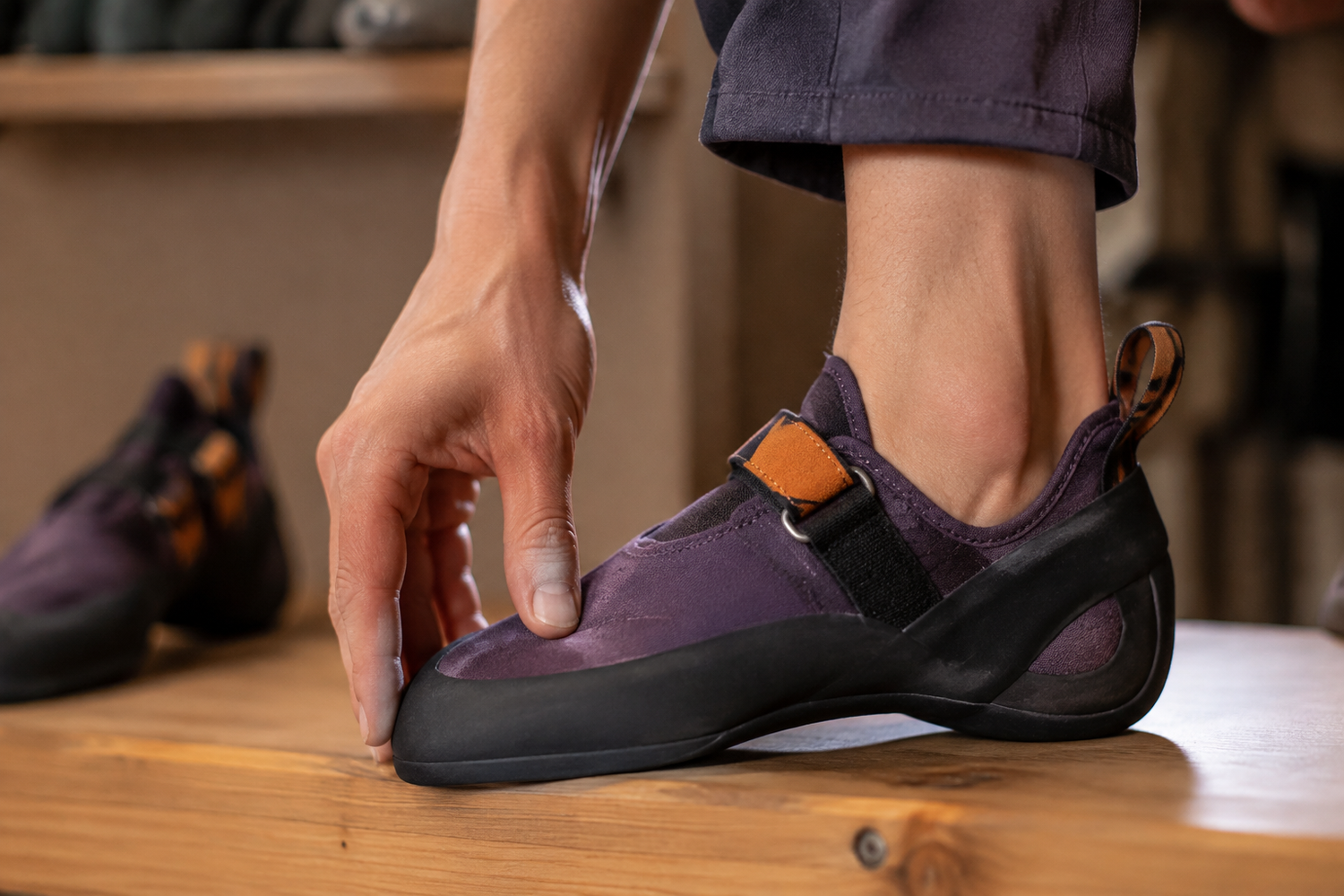
The tip of your longest toe should gently touch—or come very close to—the inside front of the shoe. Unlike a running shoe, a climbing shoe does not need extra space in front of the toes.
Check the heel
Your heel should sit securely in the heel cup. A large air pocket usually means the shoe is too big or the model is the wrong shape for your heel.
Before automatically choosing a smaller size, try a different model. Feet come in different shapes. Climbing shoes do too.
Try several shapes, not just several sizes
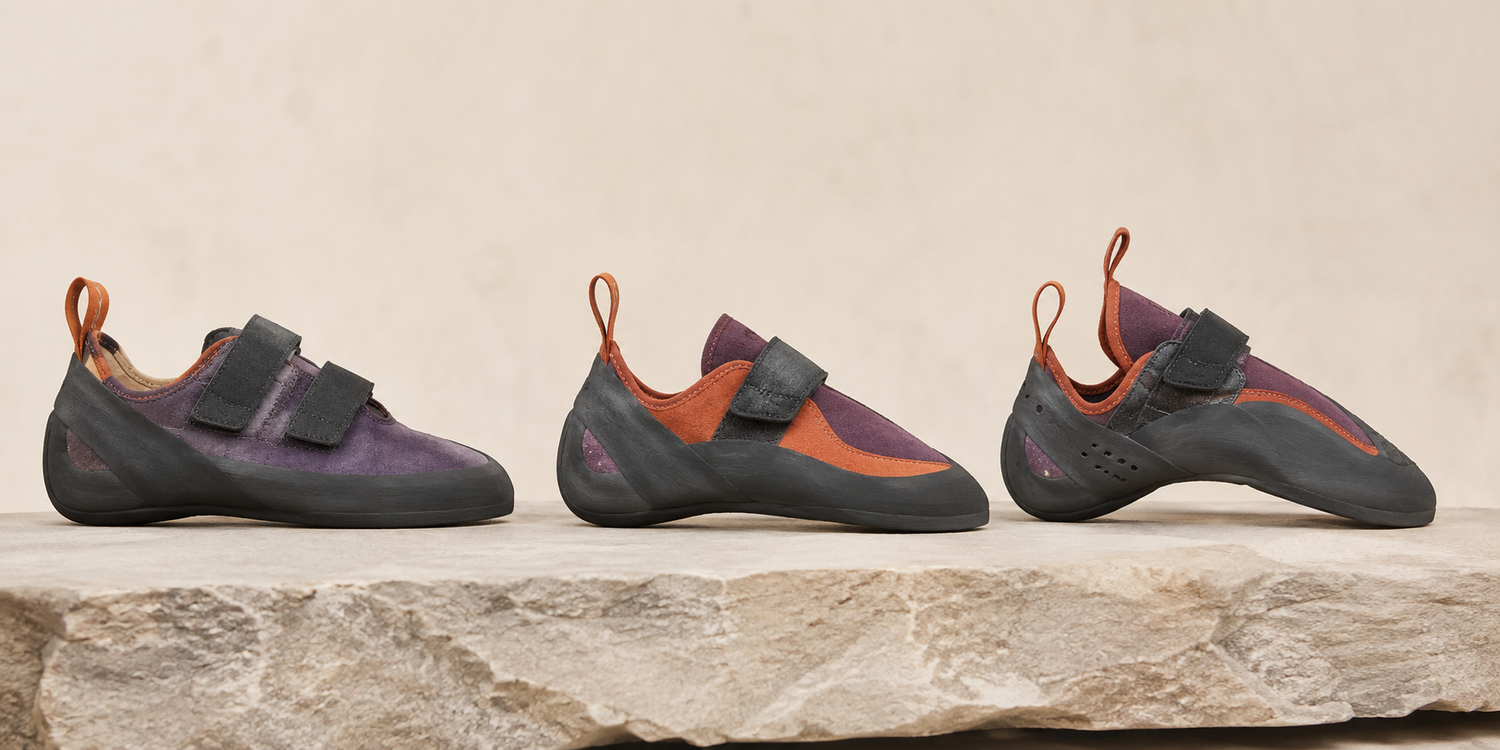
Some climbing shoes are wide through the forefoot. Others are narrow. Some have deep heel cups. Others fit shallow heels. If one model pinches strangely, you may not need a larger size. You may need a different shape.
The retail associate may have useful advice. Listen to it. But only you can feel your foot.
Trust your gut—and your toes.
Never buy based only on street-shoe size
Your street-shoe size is a starting point, not a law. Climbing-shoe sizing changes between brands and even between models. Start near your usual size. Then let the actual fit decide.
Do not depend on “they will stretch”
Unlined leather shoes often stretch more than lined or synthetic shoes. But no beginner should buy a painful shoe and hope it becomes humane later. Stretch may soften a snug shoe. It will not reliably turn the wrong shape into the right one.
2. Fashion: Buy Shoes That Make You Want to Climb
Your climbing shoes should get you psyched. Do you like how they look? Do you like the color? Do they feel like your shoes? If your budget allows it, choose the pair you are excited to wear.
Beginner models are often the best choice because they tend to be flatter, more comfortable, and less expensive. But you do not have to buy the dullest shoe on the wall because someone labeled it “beginner.”
Shoes marketed as men’s, women’s, high-volume, or low-volume may differ in width, heel shape, upper volume, rubber, or stiffness—not merely color. Try whichever version fits your foot best, regardless of the label on the box.
3. Performance: Comfort Is a Performance Feature
Climbing-shoe manufacturers design shoes for specific styles of climbing. Those details matter—eventually.
For your first pair, a climbing shoe has a simpler job:
- Put sticky rubber between your foot and the wall.
- Protect your toes.
- Fit securely enough to move with your foot.
- Feel good enough that you can focus on climbing.
If your feet hurt, you will avoid using them. You will rush your foot placements, take the shoes off constantly, and end sessions early. A comfortable shoe lets you climb longer and practice better technique.
That will improve a beginner’s performance far more than an aggressive downturn or specialized rubber patch.
Soft, Stiff, Flat, and Downturned Shoes
This is where most climbing-shoe guides begin. It is where this one nearly ends.
Soft vs. stiff
Soft shoes bend easily and help you feel the wall. They often work well for smearing and modern gym volumes.
Stiff shoes provide more support. They can help on small edges and may keep your feet from tiring as quickly.
Flat vs. downturned
Flat shoes hold your foot naturally. They suit beginners, slabs, vertical climbing, cracks, and longer sessions.
Downturned shoes focus power toward the toes. They are designed mainly for steep and overhanging climbing.
Neither design is always better. Rock has a sense of humor. A shoe that feels brilliant on one route can feel useless on the next.
Specialist features
Some shoes add toe-hook rubber, shaped heels, ankle protection, edging support, tension systems, or very soft soles. These features can make certain climbs easier. They can also make a shoe more expensive, less comfortable, or worse for something else.
For a first pair, specialization is optional. Fit is not.
The Five-Minute Climbing-Shoe Fit Test
- Start near your street-shoe size. Do not downsize automatically.
- Put on both shoes. Most people have one foot that is slightly larger.
- Check the toes. They should reach the end without sharp pain or crushing.
- Check the heel. It should feel secure, with little or no empty space.
- Stand for several minutes. Snug pressure is fine. Pain and numbness are not.
- Test them on footholds. Use the store’s test wall if permitted.
- Compare another model. A good comparison beats a good sales pitch.
- Wear them indoors first. Confirm the fit while the shoes are still returnable.
U.S. to European Climbing-Shoe Size Converter
Why the conversion? Many of the best-known climbing-shoe companies are European, so climbing shoes are commonly labeled in European sizes—even in U.S. stores. Choose U.S. men’s or women’s sizing, then move the slider to your normal U.S. street-shoe size.
Use this as a starting point: Conversion is based on La Sportiva’s adult footwear chart. Climbing-shoe sizing varies by brand, model, material, and foot shape. Comfort—not the number on the box—decides the final size.
Are Your Climbing Shoes the Wrong Size?
Probably too small
- Standing causes sharp pain.
- Your toes are painfully curled or stacked.
- Your feet become numb.
- You feel immediate hot spots on joints or toenails.
- You avoid climbing because putting them on feels like punishment.
Too big—or the wrong shape
- Your toes do not reach the front.
- Your foot slides inside the shoe.
- The heel pulls away or has a large air pocket.
- The upper folds or bags significantly.
- Tightening the closure does not secure your foot.
A shoe can be loose in the heel and painfully tight in the toes at the same time. That is usually a shape problem, not a size problem.
The Best Beginner Climbing Shoe Is the One You Will Wear
The perfect first climbing shoe is not the most aggressive, technical, or expensive pair in the store.
It is the shoe that fits snugly without pain, has no major gaps, matches your foot, and makes you excited to climb.
Start with comfort. Choose the style you like. Worry about specialized performance when your climbing gives you a reason to.
Beginner Climbing-Shoe Sizing FAQ
Should climbing shoes hurt at first?
No. Beginner climbing shoes should feel snug and secure, but they should not cause sharp pain, numbness, or intense pressure. Mild tightness is normal. Suffering is not a sizing system.
Should I size down in climbing shoes?
Not automatically. Start near your street-shoe size and try several sizes and models. Brand sizing, materials, shoe shape, and your foot shape matter more than a universal downsizing rule.
Should my toes touch the end of climbing shoes?
Yes. For a comfortable beginner fit, your toes should gently touch or come very close to the end without painful curling, crushing, or empty space in front.
Should climbing shoes fit like socks?
That is a useful beginner rule. The shoe should hug your foot closely, with minimal empty space around the toes, sides, and heel, while remaining comfortable enough to stand and climb in.
Is a gap in the heel bad?
A large gap is a problem because the shoe may move during heel hooks or precise footwork. Try a smaller size and a different model. If the toes are already tight, look for a heel shape that better matches your foot.
Are men’s and women’s climbing shoes different?
Sometimes. They may use different volumes, heel shapes, widths, rubber, or stiffness. Treat the labels as fit categories, not rules about who can wear them. Choose the version that feels best.
Do climbing shoes stretch?
Some do. Unlined leather usually stretches more than lined leather or synthetic material. Buy a shoe that fits properly now instead of depending on a painful shoe to become comfortable later.
Can beginners wear socks with climbing shoes?
Yes. Thin socks may improve comfort and hygiene, especially in rental shoes. If you plan to climb in socks, wear the same kind while trying on and sizing your shoes.