Flagstaff Mountain Climbing Guide: Boulder's Best-Kept Beginner Crag
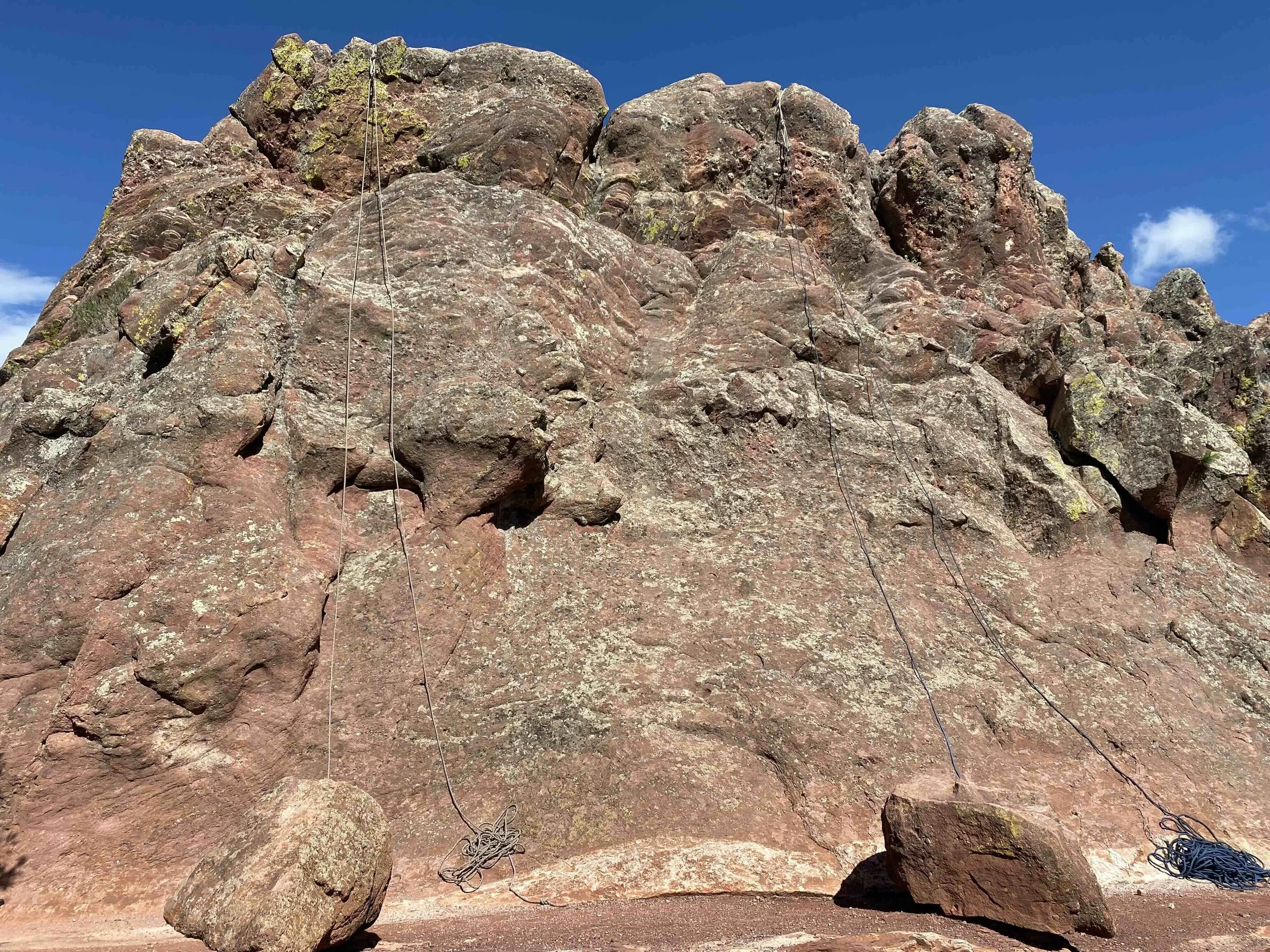
Flagstaff Mountain Climbing Guide
Historic bouldering, short approaches and a small amount of beginner-friendly top-rope climbing at Crown Rock—plus the parking, access and route-selection details that matter.
Close to town, but not one type of climbing
Flagstaff Mountain is best known as one of Boulder’s historic bouldering areas. Its short, reddish walls and scattered boulders hold traverses, technical faces, overhangs and highballs developed across generations.
It also has a limited amount of short roped terrain. Crown Rock’s east face is a commonly used beginner top rope, and Rope Wranglers uses nearby short walls for introductory sessions when conditions and access are appropriate.
That distinction matters. Flagstaff is useful for first outdoor climbing days, but it is not a sport-climbing area in the Boulder Canyon sense, and it is not a multi-pitch destination like the Flatirons.
New to outdoor climbing? Read How to Get Started Outdoor Rock Climbing in Boulder and What to Expect on Your First Outdoor Climbing Day.
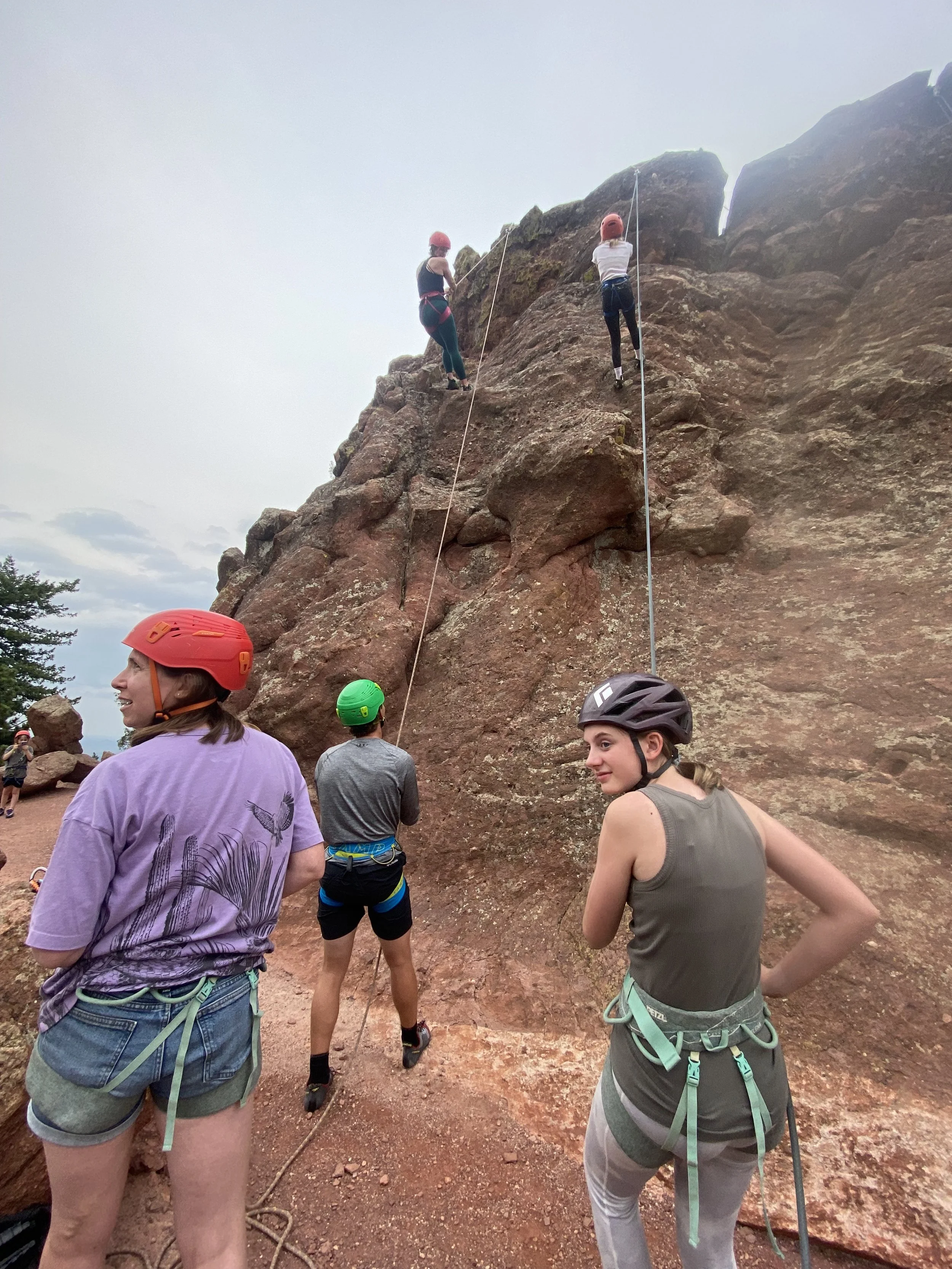
Crown Rock has approachable top-rope terrain, but most named Flagstaff areas—Monkey Traverse, Pratt’s Rock, Capstan, Cloud Shadow, the Amphitheater and First Overhang—are bouldering zones rather than rope crags.
Think in roadside clusters, not one crag
Flagstaff Road climbs steeply from Boulder and passes a series of pullouts, boulders and short walls. The best-known climbing is concentrated around several parking clusters, with more scattered problems above and below the road.
Approaches are often only a few minutes, but the area is less obvious than it first appears. Social trails cross one another, many rocks have local names, and similar-looking walls sit close together. A current guide, downloaded map or experienced partner saves considerable wandering.
Bouldering
Traverses, short faces, overhangs and highballs make up most of Flagstaff’s climbing.
Limited top-rope terrain
Crown Rock and nearby short walls are useful for instruction, but Flagstaff is not a broad route-climbing venue.
Usually short
Many areas are within a few minutes of a legal pullout, although navigation can be surprisingly vague.
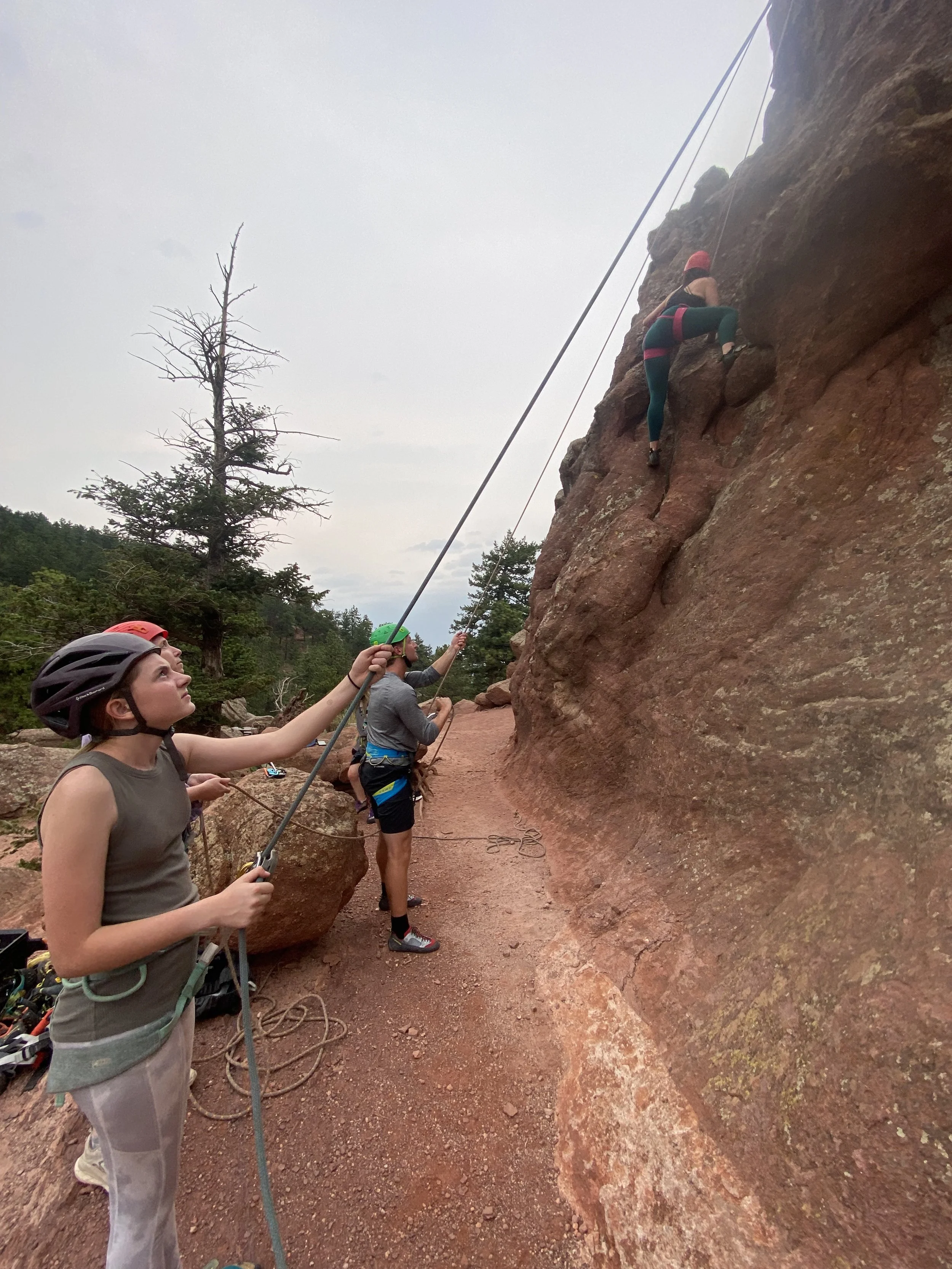
Short routes allow groups to repeat climbs, switch lines and spend more time learning movement and rope systems.
What Flagstaff sandstone actually feels like
Most of the climbing described in this guide is on reddish Fountain Formation sandstone. The rock is often highly textured and studded with edges, cobbles, seams and rounded features. Near the summit, Flagstaff Mountain also exposes much older Boulder Creek granodiorite, but that is not the dominant rock at the classic lower bouldering clusters.
The climbing is varied at a small scale. One boulder may have a low-angle face on one side and a steep roof or traverse on the other. Footwork, body position and precise use of small features matter more than the modest height of the rock might suggest.
What transfers from the gym
Movement vocabulary, strength and comfort trying hard all help. What does not transfer automatically is pad placement, spotting, choosing a safe fall zone, reading top-outs or deciding when a highball is not worth the consequence.
For roped climbing, the same distinction applies: belay familiarity helps, but outdoor anchors, uneven ground and route identification still require context.
Read Gym Climbing vs. Outdoor Climbing for the broader transition.
The main Flagstaff climbing clusters
This is a planning overview, not a complete guidebook. Flagstaff contains hundreds of documented problems and many locally named sub-areas. Verify the exact line, grade, landing and access before climbing.
Crown Rock and Monkey Traverse
Crown Rock holds the easy East Face top rope. Nearby, the Monkey Traverse area contains the mountain’s most recognizable traverse and several historic boulders.
Pratt’s Rock and Beer Barrel
Pratt’s packs a remarkable amount of history into a small wall, with classic problems from V0 through double digits. Beer Barrel adds slabby and overhanging terrain nearby.
Amphitheater, Red Wall and Tutorial Rock
A dense group of boulders with technical faces, older highballs and a useful spread of movement styles. Route identification matters.
Capstan and Cloud Shadow
Capstan is visible from the road and contains famous hard problems. Cloud Shadow sits below the road with traverses, pockets and a larger collection of lines.
First Overhang and Upper Y
First Overhang is a classic Flagstaff testpiece. Upper Y offers a steep traverse, straight-up problems and terrain that can remain shaded or protected.
Great Ridge and outlying areas
Great Ridge, Pumpkin Rock, the Candel area and the Dark Side spread the climbing out and can provide quieter options when the central zones are busy.
Why Crown Rock works for a first top-rope session
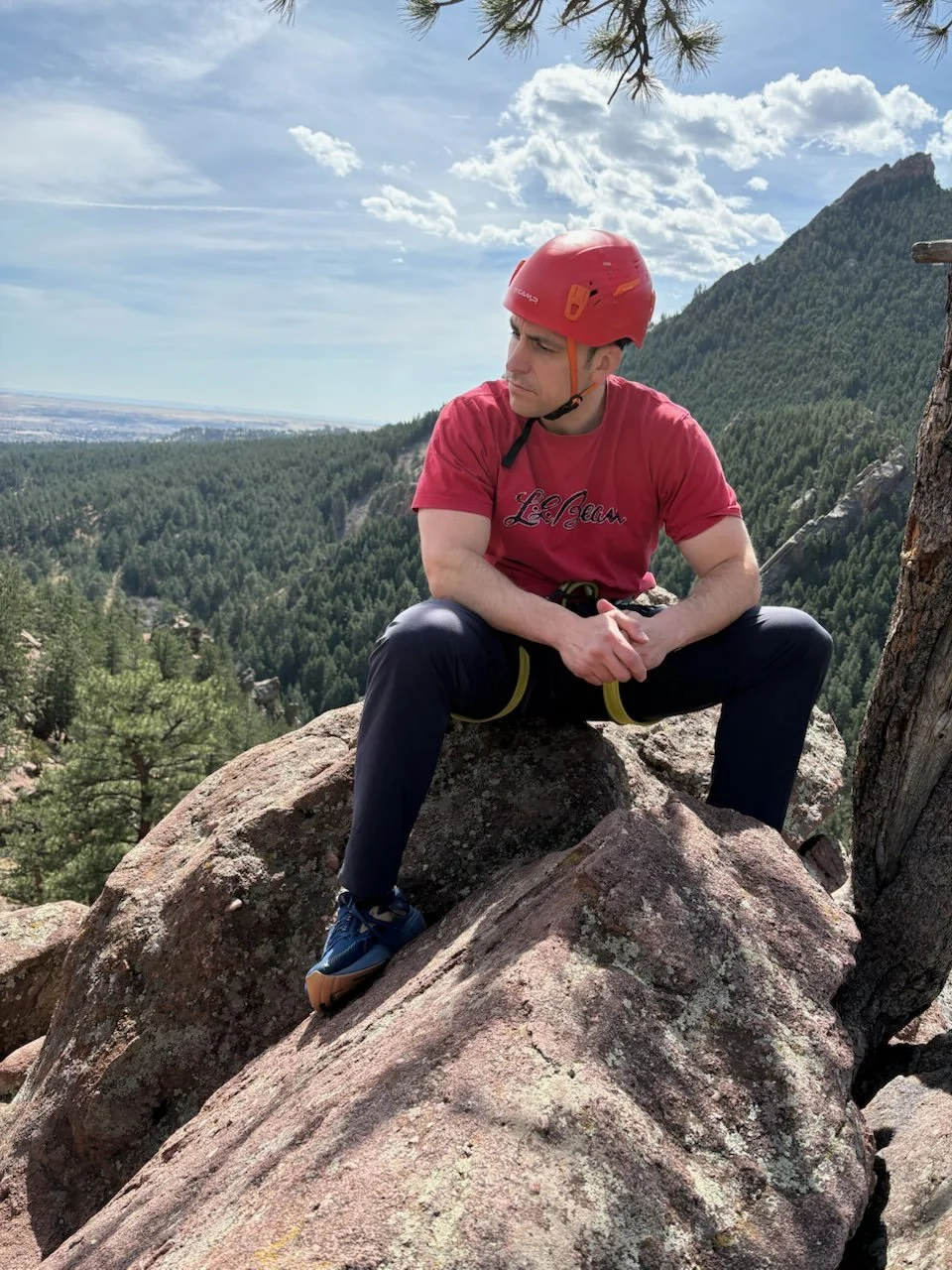
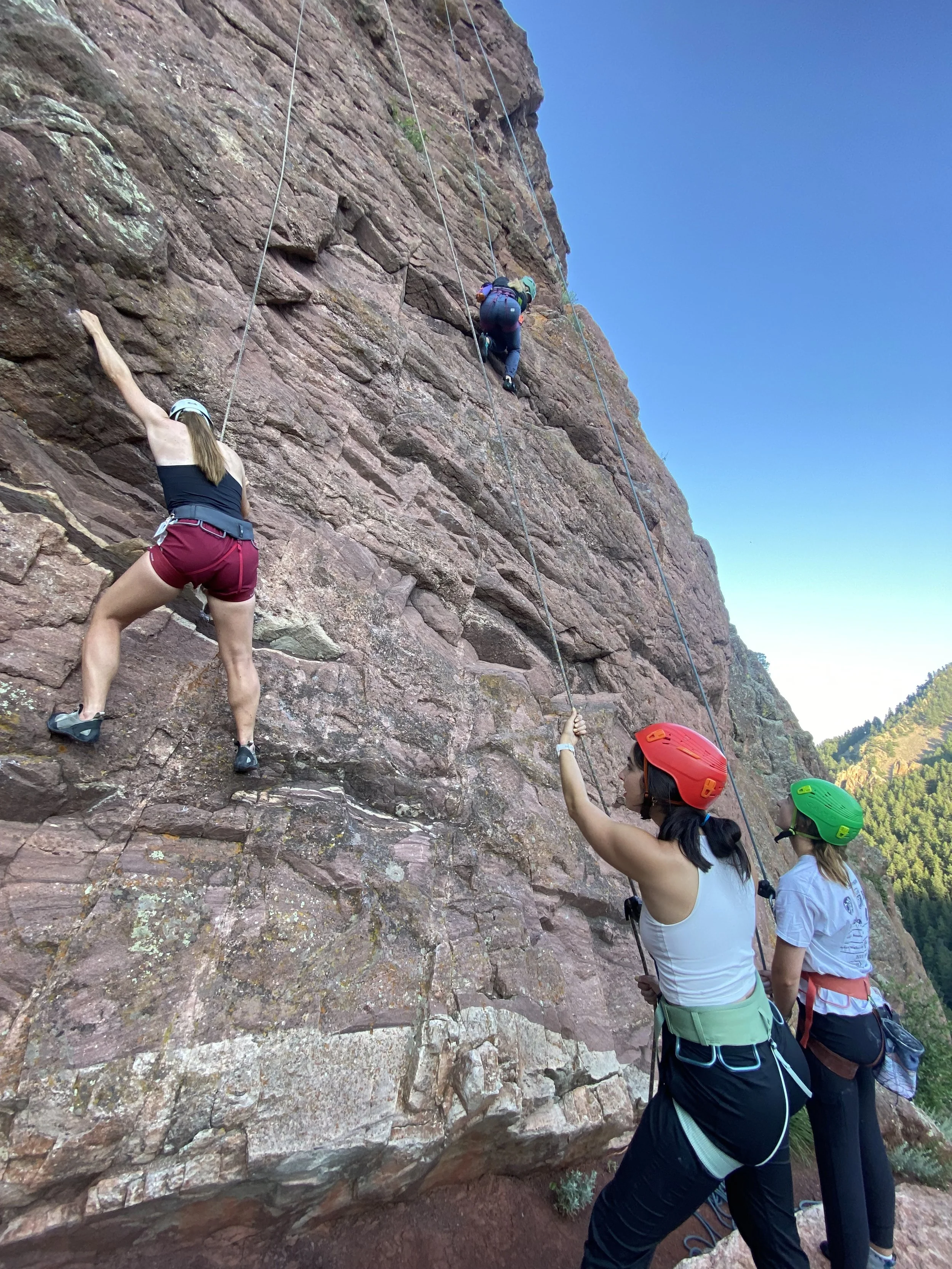
Mountain Project lists Crown Rock’s East Face as a 5.5 top rope. The wall is short, featured and close to the parking area. Those qualities make it practical for introducing harnesses, knots, belaying, lowering and movement on real rock without adding a long approach or a full-day objective.
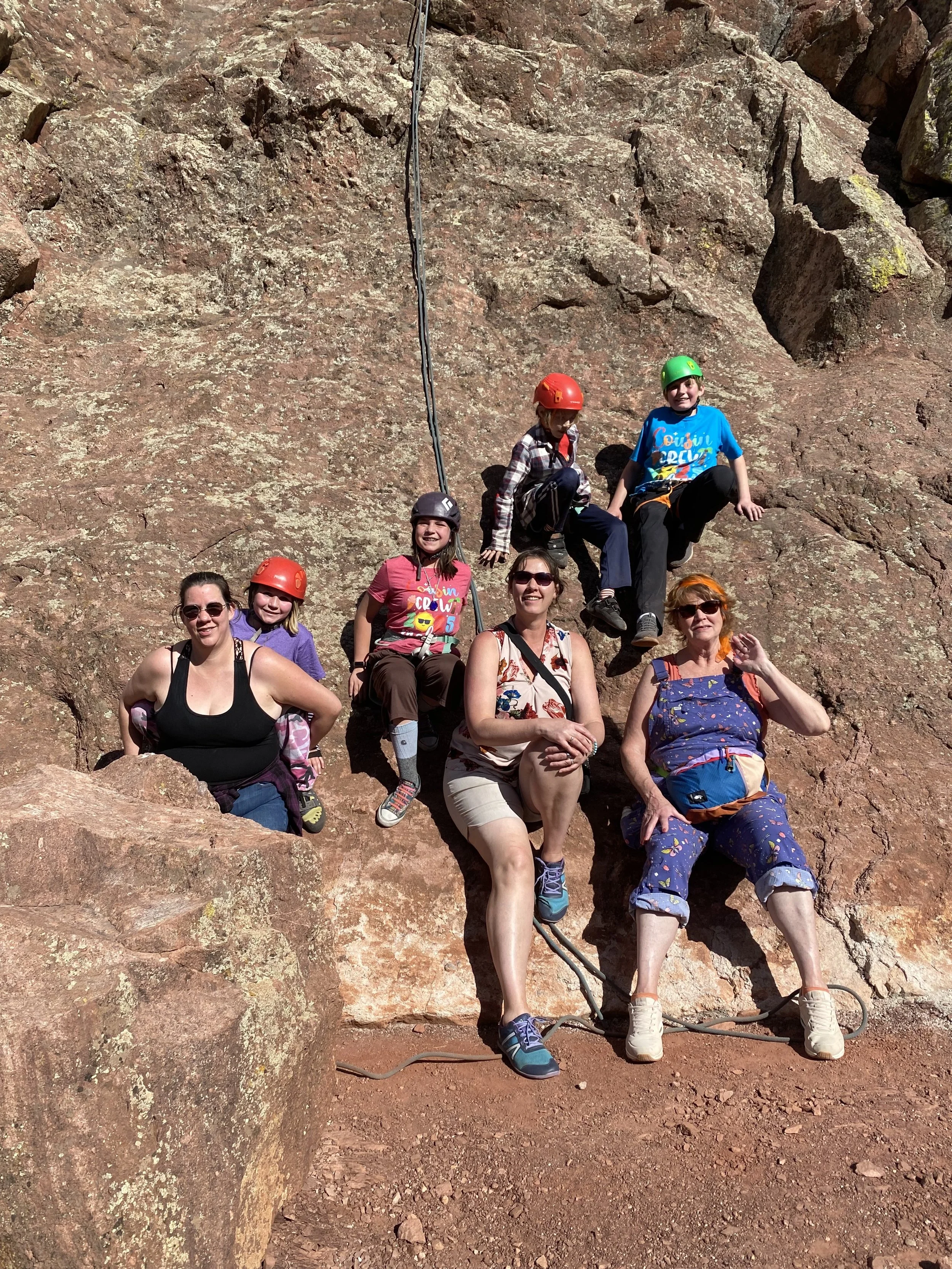
The value is not route volume. It is repetition. Several ropes can be managed in a compact area, participants can return to the ground quickly, and instruction can focus on the basics.
Do not assume that a visible line has bolts or that every short wall is suitable for independent top-roping. Verify the specific route, anchor access and current local information before setting up.
Flagstaff bouldering: historic, technical and not automatically easy
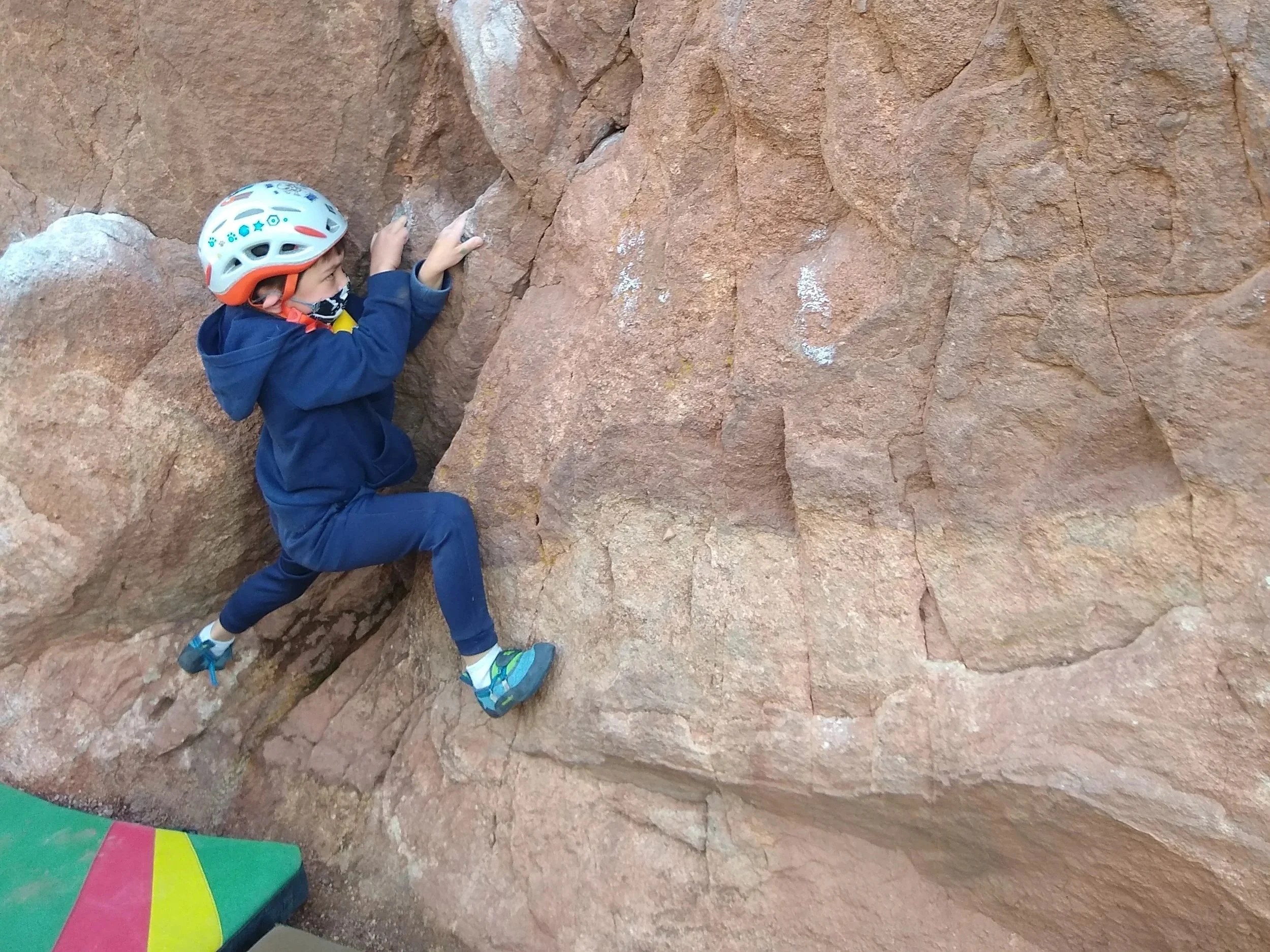
Flagstaff has a large concentration of intermediate problems and fewer true beginner problems than its roadside access might suggest. The grades can feel exacting, the rock rewards specific beta, and many older lines have high or uneven top-outs.
A few routes explain the area’s range:
- Bring enough pads for the landing, not merely the first move.
- Identify the downclimb before starting.
- Use spotters to direct falls toward pads, not to catch climbers.
- Treat highballs as routes with bouldering protection—not ordinary gym problems.
- Do not block trails, pullouts or neighboring problems with gear.
- Confirm the line; Flagstaff has many eliminates and variations.

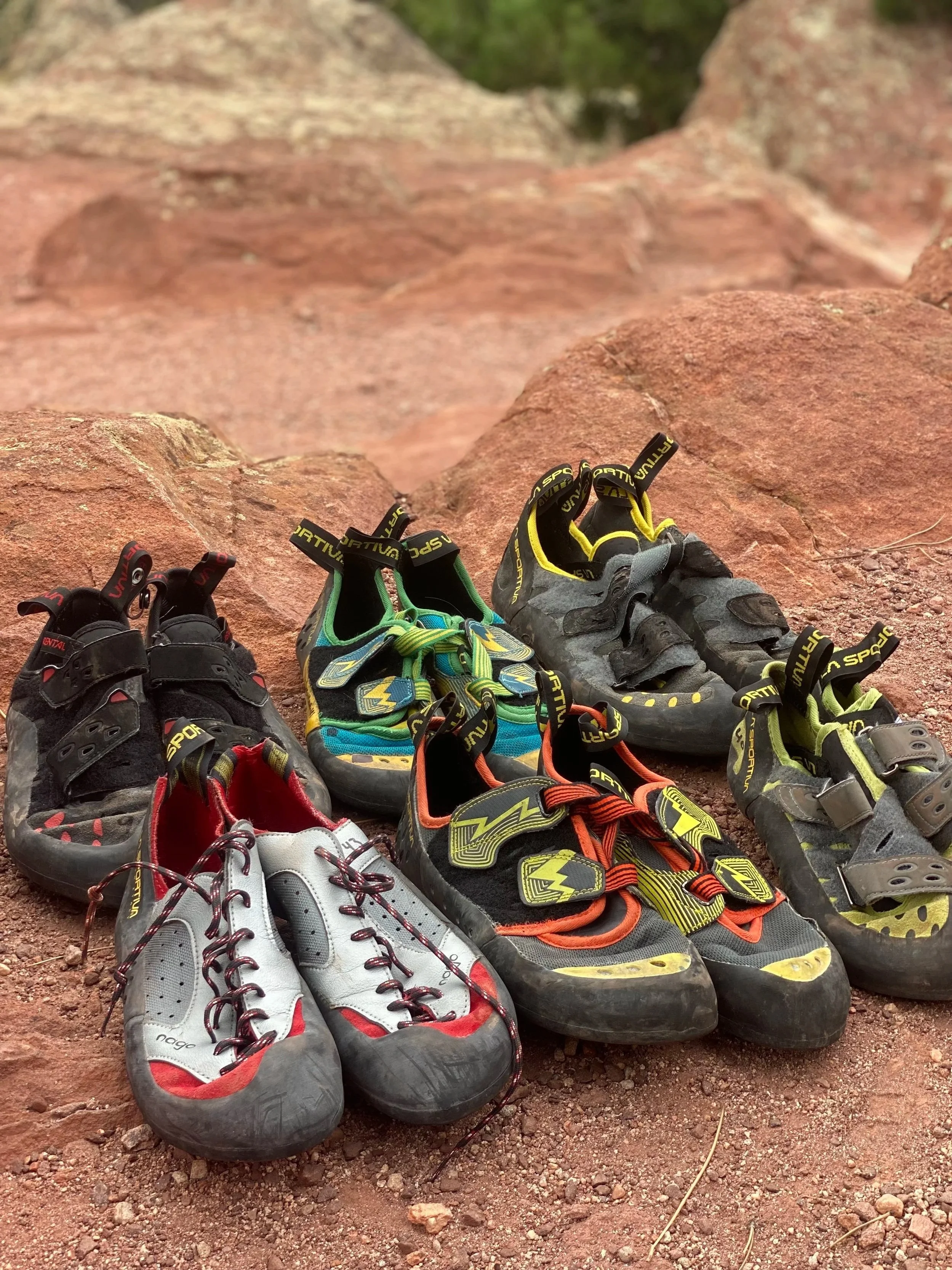
Outdoor bouldering adds pad placement, spotting, top-outs and descent planning to the movement itself.
Parking, road safety and current closures
Flagstaff Road is narrow, steep and heavily used by cyclists, runners, hikers and drivers. Park only in established pullouts, keep the vehicle fully outside the travel lane and avoid unloading into traffic.
City of Boulder rules close Flagstaff Mountain parking areas from 9 p.m. to 5 a.m. Visitors whose vehicles are not registered in Boulder County need an OSMP parking permit; the current daily permit is $5 and applies across listed OSMP fee areas for that date.
Parking
Crown Rock, Realization Point, the summit and other pullouts can fill quickly. Purchasing a permit does not reserve a space.
Closures
OSMP uses seasonal wildlife closures and may lift or extend them based on nesting activity. Check the live climbing webmap before each visit.
Road conditions
Flagstaff Road has tight curves and limited sightlines. Cross and unload carefully, especially near hairpins.
Leave No Trace
Pack out tape, chalk packaging and food. Do not leave ropes, pads or packs unattended where they block other users or attract wildlife.
City of Boulder climbing and closure information should take priority over old guidebooks, remembered access and stale route comments.
What a beginner day at Flagstaff should include
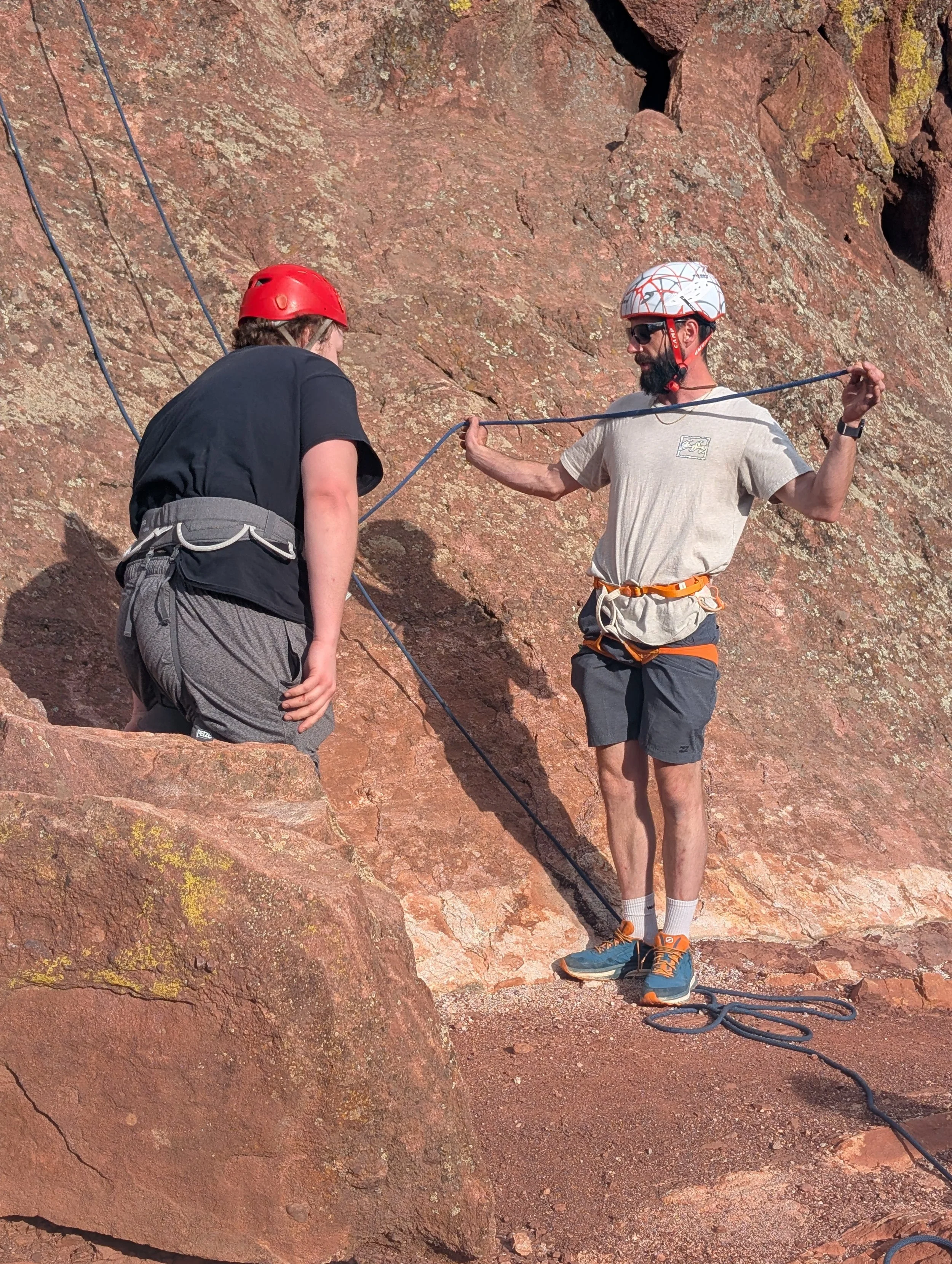
Keep the objective small and the learning clear
A first session does not need route mileage across the mountain. One appropriate wall is enough when the goal is to understand how outdoor climbing works.
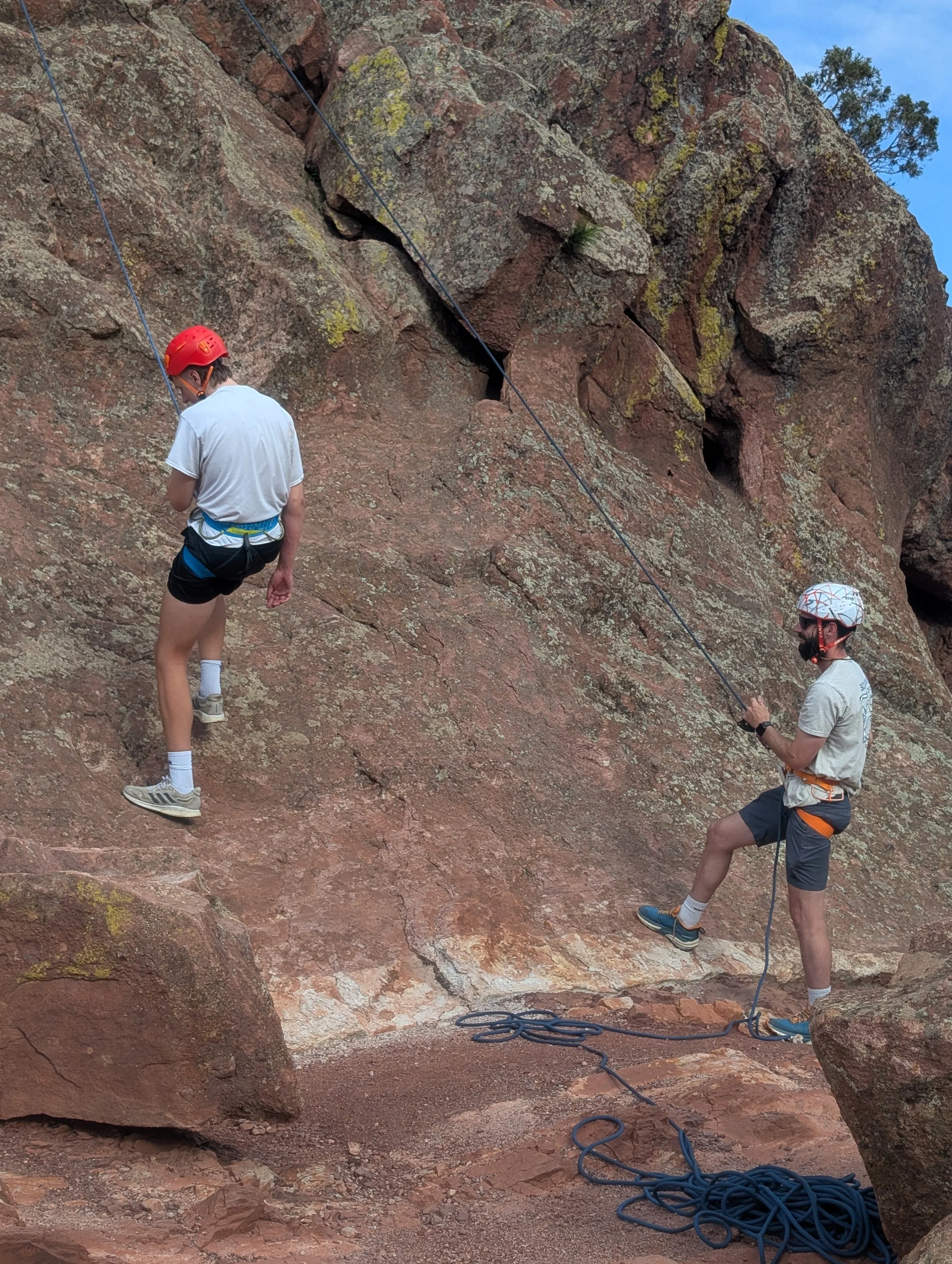
Rope Wranglers’ Free Intro to Outdoor Climbing uses Flagstaff’s short-access terrain for exactly this purpose. Climbers ready for regular sessions can continue through the Top Rope Social Club or Bouldering Social Club.
Flagstaff through the seasons
Broadly useful
Cool rock and mild temperatures suit both bouldering and short rope sessions. Watch afternoon storms and current wildlife closures.
Use mornings and shade
Exposed sandstone heats quickly. Early sessions, shaded clusters and flexible timing are more useful than forcing a hot plan.
Best overall conditions
Cooler air improves friction and makes the central bouldering areas especially appealing.
Good on sunny days
South-facing rock can be comfortable in direct sun, but snow, ice, wet rock and shaded landings may remain.
Inspect, do not assume
A sunny face may be dry while shaded holds, top-outs or approaches remain wet or muddy.
Match the area to the day
Aspect, wind, temperature and recent moisture matter more than the date on the calendar.
For a fuller framework, read Best Seasons for Rock Climbing in Boulder.
Flagstaff Mountain climbing FAQ
Is Flagstaff Mountain good for beginner climbers?
Yes, in the right format. Crown Rock’s short top-rope terrain is useful for structured beginner instruction. The wider bouldering area is not automatically beginner-friendly because many problems are intermediate, high or difficult to identify.
Is Flagstaff mainly bouldering or rope climbing?
Primarily bouldering. Flagstaff is a historic bouldering destination with hundreds of problems. Roped climbing is limited and concentrated on a few short features such as Crown Rock’s East Face.
Can I lead sport routes at Flagstaff?
Flagstaff is not a standard sport-climbing destination. Do not assume short walls are bolted. Boulder Canyon is the more appropriate nearby area for a broad selection of sport routes.
What are the best-known Flagstaff bouldering areas?
Monkey Traverse, Pratt’s Rock, Beer Barrel, the Amphitheater and Red Wall, Capstan, Cloud Shadow, First Overhang, Upper Y and Great Ridge are useful central references. Many more outlying areas exist.
Do I need a parking permit?
Vehicles not registered in Boulder County need an OSMP permit to park on Flagstaff Mountain. Check the City of Boulder parking page for current fees, zones and rules.
Are there seasonal climbing closures?
Yes. OSMP manages seasonal wildlife closures and updates them based on nesting activity. Check the official climbing webmap before each visit.
Should a first-time climber hire a guide?
A guide or structured intro is useful when you do not already understand outdoor anchors, belaying, pad placement, spotting or route selection. Read Hiring a Rock Climbing Guide in Boulder for a fuller comparison.