How to get started outdoor rock climbing in Boulder
How to Start Outdoor Rock Climbing in Boulder
A clear first-day plan for moving from curiosity—or the climbing gym—to real rock, without buying a rack or pretending you already know the systems.
Most people do not need months of preparation to start climbing outside. They need one well-planned day on appropriate terrain.
That first day should be simple: climb on top rope, understand the basic system, learn how outdoor movement differs from the gym, and leave with a clear next step.
Boulder makes that transition unusually accessible. Flagstaff Mountain, Boulder Canyon and the Flatirons each offer different beginner options, and the right location depends on weather, goals and experience.
Go outside with an experienced partner or guide. Start on top rope. Learn the system while you climb. Build independence after the environment makes sense.
The Part Nobody Warns You About
Most beginners are not limited by strength. They are uncertain about everything around the climbing.
In a gym, routes are marked, anchors are permanent, floors are padded and the environment is managed. Outside, you must identify the route, understand the anchor, manage the rope on uneven ground, communicate over distance and account for weather, rock quality and other climbers.
The gap between gym climbing and outdoor climbing is real. It is also smaller than it first appears. One well-structured day is often enough for the environment to stop feeling mysterious.
The physical movement transfers. The systems, judgment and route-reading must be learned outside.Gym Climbing vs. Outdoor Climbing: What Actually Changes

The first useful lesson is not a difficult move. It is understanding the system supporting the climb.
The Simple Path to Climbing Outside
People progress at different speeds, but the sequence is usually the same.
Try It
Climb on top rope while an experienced person manages the technical setup. Focus on movement, communication and how real rock feels.
Understand the Systems
Learn harness and helmet checks, knots, belaying, rope management, anchors and standard partner communication.
Apply the Skills
Repeat the systems on appropriate routes. Add responsibility gradually instead of trying to learn every discipline at once.
Build Independence
Choose routes, assess conditions, manage the full system and climb with regular partners—or continue into sport, trad and multi-pitch instruction.
Many beginners can complete the first two stages in one day. Independence takes repetition and judgment, not merely memorizing a checklist.
Do You Need Gear or Experience?
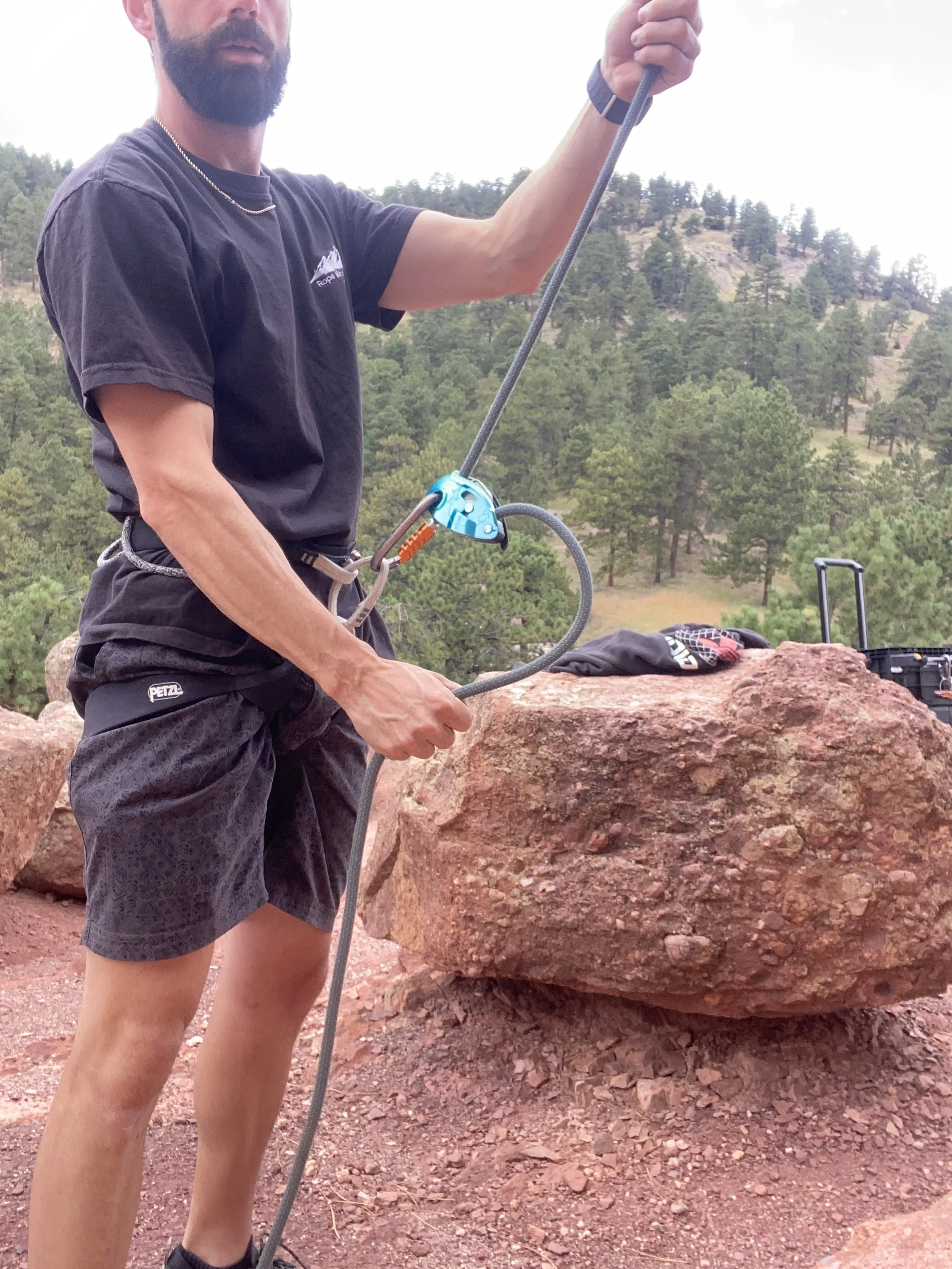
No experience is required for a guided beginner day.
Technical gear can be provided, including a helmet, harness, climbing shoes, rope and belay equipment. You do not need to buy equipment before learning what fits and what type of climbing you want to pursue.
Bring comfortable outdoor clothing, water, snacks, sun protection, layers and sturdy shoes for the approach.
The useful starting qualities are patience, attention and a willingness to ask questions.
- No prior climbing required
- No technical gear required
- Basic fitness is enough
- Routes are chosen for the group
What Your First Outdoor Climbing Day Looks Like
A beginner day may take place at Flagstaff Mountain, Boulder Canyon or another appropriate local area. The location should be selected for the group, weather, route access and skills being taught—not merely because a crag is famous.
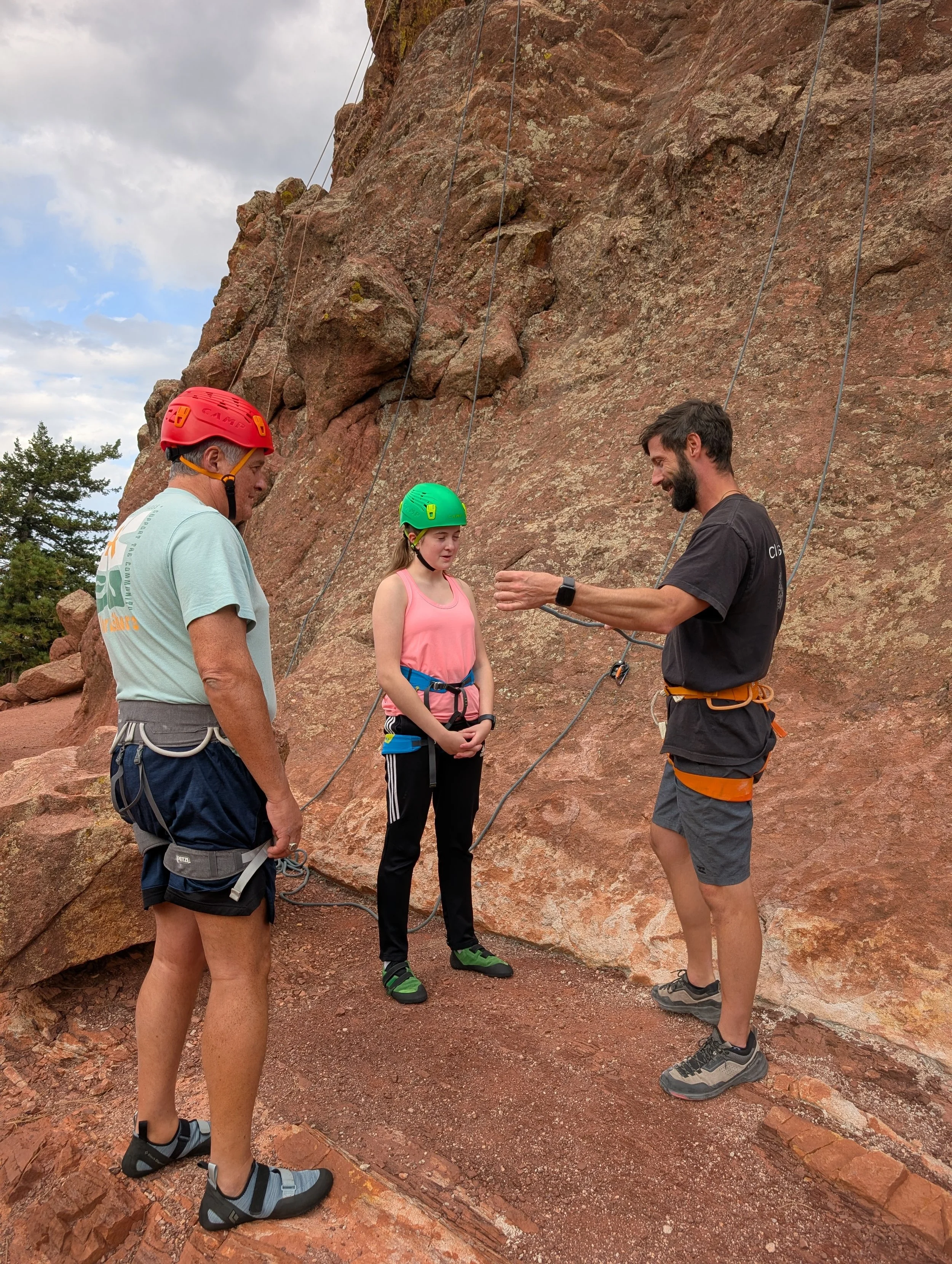
The day normally begins on the ground. You review equipment, communication and how the top-rope system works before climbing.
A typical first day
The goal is not to maximize grades. It is to understand how climbing works in an environment that does not simplify the decisions for you.
Do You Need a Guide?
No. Many people begin with a knowledgeable friend or mentor. What matters is that the person managing the day understands the route, anchor, equipment, access and current conditions.
A guide is useful when you do not already have that person, when you are visiting Boulder, or when you want instruction rather than a supervised outing. Good instruction gives the day a sequence: appropriate terrain first, clear systems, repeated practice and a defined next step.
A guide does not make climbing risk-free. The value is better route selection, sound systems and faster feedback.
The main advantage is not convenience. It is learning the right thing, in the right order, on terrain that matches your actual experience.Hiring a Rock Climbing Guide in Boulder: What It Costs and When It Is Worth It
A Few Things Worth Knowing Before You Go
When should you climb?
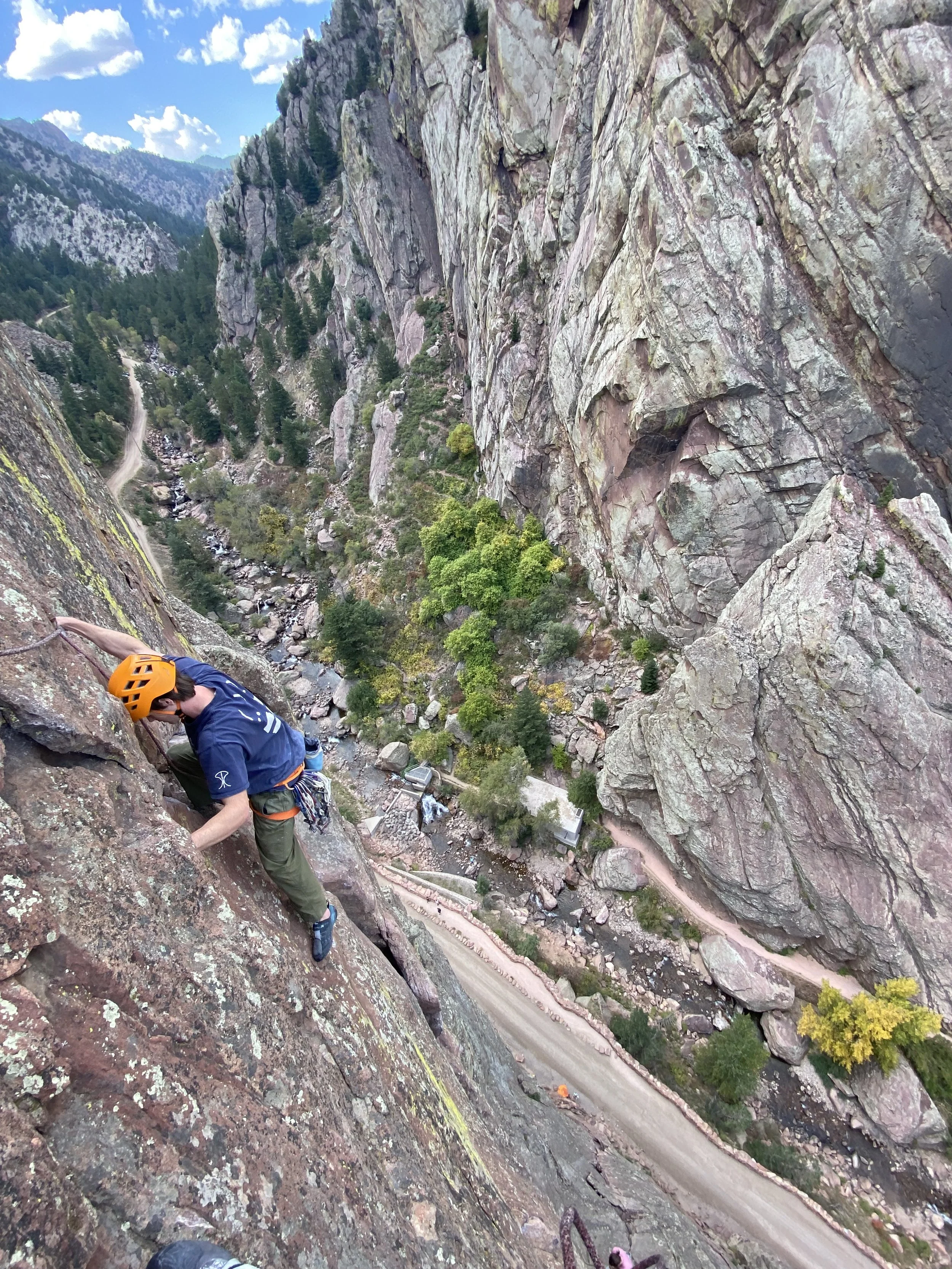
Boulder has climbable days in every season, but the correct area changes with heat, sun, wind, moisture and storms.
Best seasons and conditions →Is outdoor climbing dangerous?
Yes. The risks include system errors, rockfall, weather and poor judgment. Beginners should understand how those risks are managed.
Outdoor climbing risk explained →What about fear of heights?
Fear is common and useful. A top-rope setup lets you learn how the system feels without needing fear to disappear first.
Fear of heights and climbing →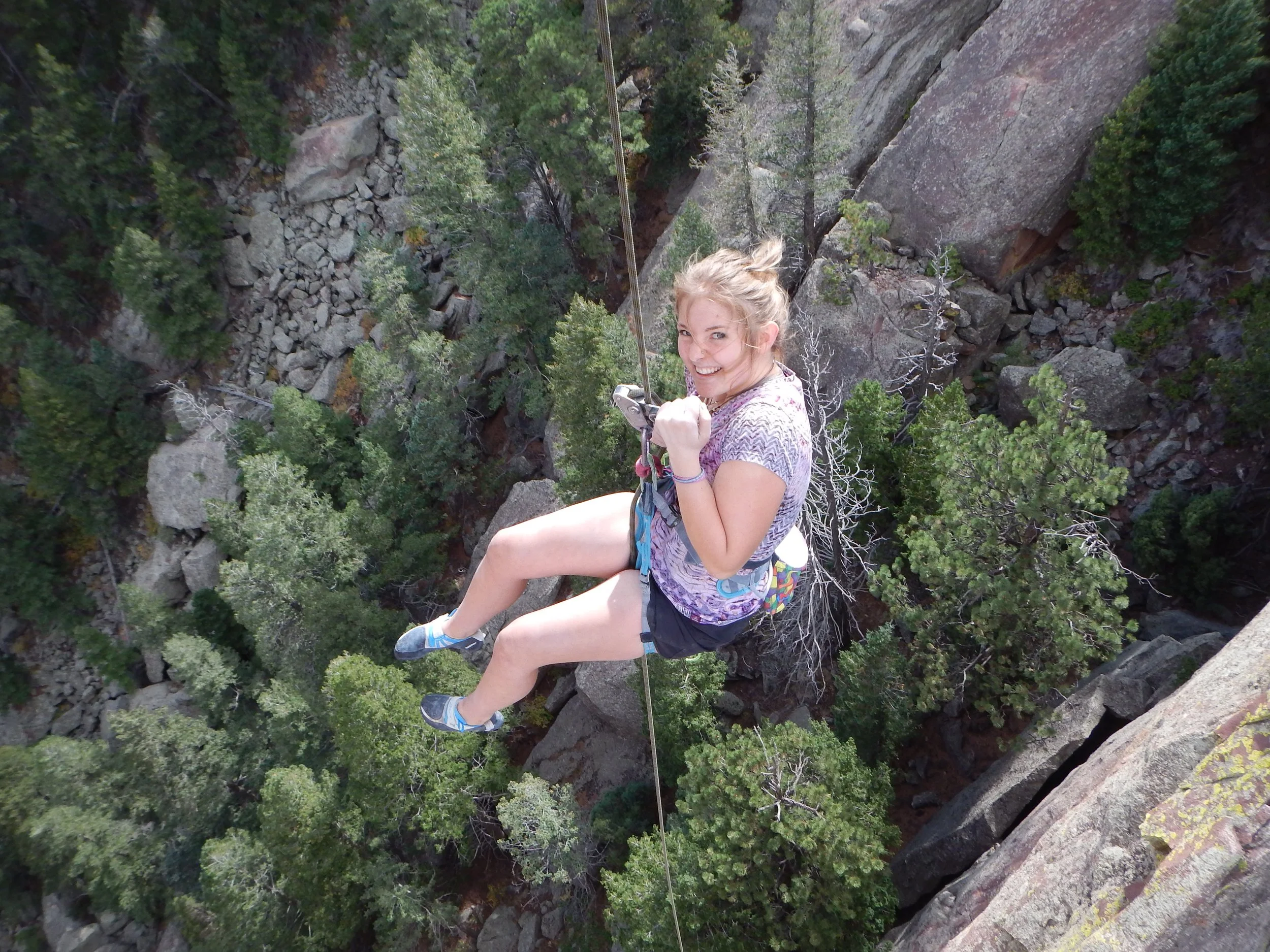
Fear usually becomes more manageable after the climber understands the rope system and experiences it working.
Starting Outdoor Climbing in Boulder: FAQ
Can I start outdoor climbing with no experience?
Yes. A beginner day can start with equipment fitting, basic communication and top-rope climbing. No gym experience is required.
Do I need to buy climbing gear first?
No. Technical equipment is provided on Rope Wranglers guided days and the free intro session. Learning first also helps you avoid buying gear that does not fit your needs.
Where do beginners climb near Boulder?
Flagstaff Mountain and selected Boulder Canyon crags are common first-day choices. The best location depends on weather, group size, access and the skill being taught.
Should a gym climber begin below their indoor grade?
Usually. Outdoor routes require natural hold reading, route-finding and more active risk assessment. Starting conservatively leaves room to learn the environment.
Is top roping the best place to begin?
For most beginners, yes. The rope is anchored above the climber, allowing them to focus on movement and communication while an experienced person manages the setup.
How long does it take to climb independently?
The basic systems can be introduced in one day. Reliable independence requires repeated practice, sound judgment and experience across different routes and conditions.
Start With One Good Day Outside
You do not need to know everything before you begin. Start on suitable terrain, understand the system and let the next step become clear through experience.
No experience needed. Technical gear included.