Guided climbing near Boulder
Boulder Canyon climbing, matched to your level.
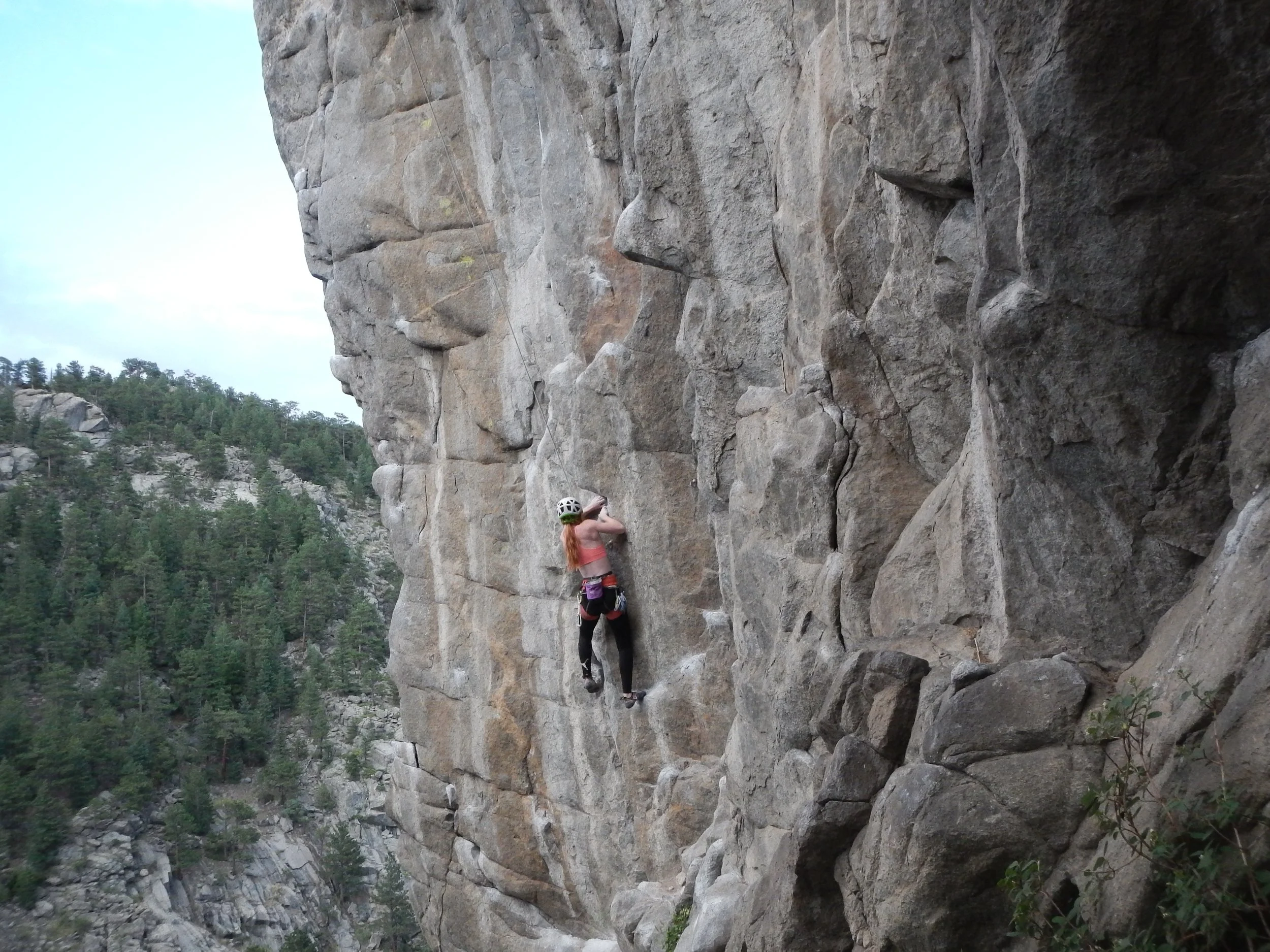
Choose a beginner cragging day, harder single-pitch climbing, or a multipitch objective. Your guide chooses the exact crag around your goals, weather, current access, and the kind of climbing you want to experience.
Granite climbing Most approaches 5–15 minutes Equipment included
What the day feels like
A cragging day
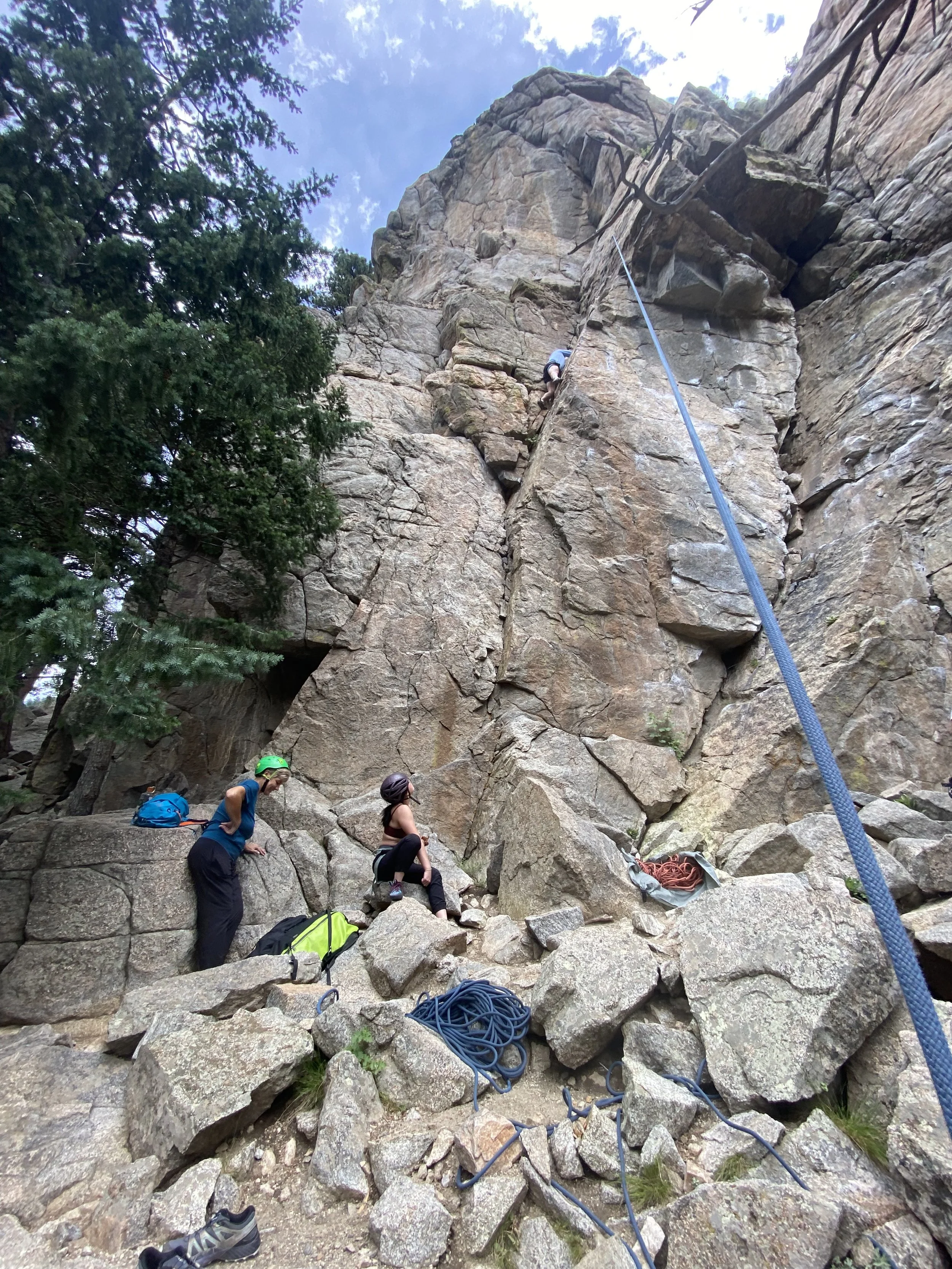
A short approach leads to one climbing area. Your guide sets several top ropes—or leads sport routes and builds top ropes as needed—so the day stays focused on single-pitch climbing, movement, and enjoying the outdoor setting.
Walk in
Most approaches take about 5–15 minutes from a canyon pullout.
Set the routes
Your guide manages anchors, ropes, belays, and the technical systems.
Climb at your level
Try several routes, build skill, rest when needed, and climb again.
Multipitch is the exception: instead of returning to the ground after each route, you continue upward through several pitches on one longer climb.
Choose the style, not the exact crag
Where does your climbing fit?
Pick the level that sounds right. The areas below show the character of the day; your guide makes the final location choice around conditions and access.
Beginner cragging · several moderate routes
A first outdoor day with room to learn.
Top ropes, moderate granite, and a comfortable pace. This is for first-time outdoor climbers, families, and gym climbers who want to learn how outdoor climbing feels without chasing a summit.
Cascade Crag
Cool, shaded granite with several moderate sport routes close together. A good warm-weather choice for building mileage.
Nip & Tuck
A quiet, sunny base with cracks, faces, and varied movement. A relaxed place to try several styles of granite climbing.
The Riviera
A roadside classic with friendly moderate routes and almost no wasted time. An efficient introduction to Boulder Canyon granite.
Animal World
Steeper sport climbing with a useful progression from warm-ups into sustained 5.11 and 5.12 terrain.
Dream Canyon
A more secluded setting with technical sport climbing and a bigger sense of place. Best for climbers comfortable on 5.10 and above.
Blob Rock
Sunny, historic granite with technical face and crack climbing. Particularly useful when cooler weather favors south-facing rock.
Cob Rock
Shaded classic trad routes with cracks, corners, and two- to three-pitch options. A strong moderate multipitch progression.
The Dome
Low-angle granite and short multipitch routes near the canyon mouth. A practical introduction to belay transitions and moving upward together.
Castle Rock
Historic 300-plus-foot crack climbs with a real summit and scrambling descent. A more traditional and committing canyon adventure.
Choose the right format
Simple pricing for your group.
Private climbing is for parties of 1–6. Groups of 7–12 get a dedicated group experience with a clear per-person rate. Transportation is not included.
Private Guiding
Your own guide, your own pace, and a climbing plan built around your party.
- 1–6 climbers
- Add $85 for each additional climber
- Four-hour private experience
- All technical gear included
Groups & Teams
For schools, companies, clubs, retreats, and other groups that want one organized outdoor experience.
- 7–12 participants
- Four-hour guided experience
- Beginner-friendly and gear included
- Custom planning for your group
A Boulder Canyon specialty
What is a Tyrolean traverse?
Some crags sit across Boulder Creek. A Tyrolean is a fixed rope stretched above the water. You clip into the line and pull yourself across while remaining supported by your harness.
Your guide checks the rope, anchors, and current creek conditions.
You clip in, keep your pack secured, and pull across the line.
At the far side, you unclip and continue the short approach to the crag.
A Tyrolean is part of the approach—not a required skill. Your guide manages the system and may choose another crag when the crossing is not appropriate.
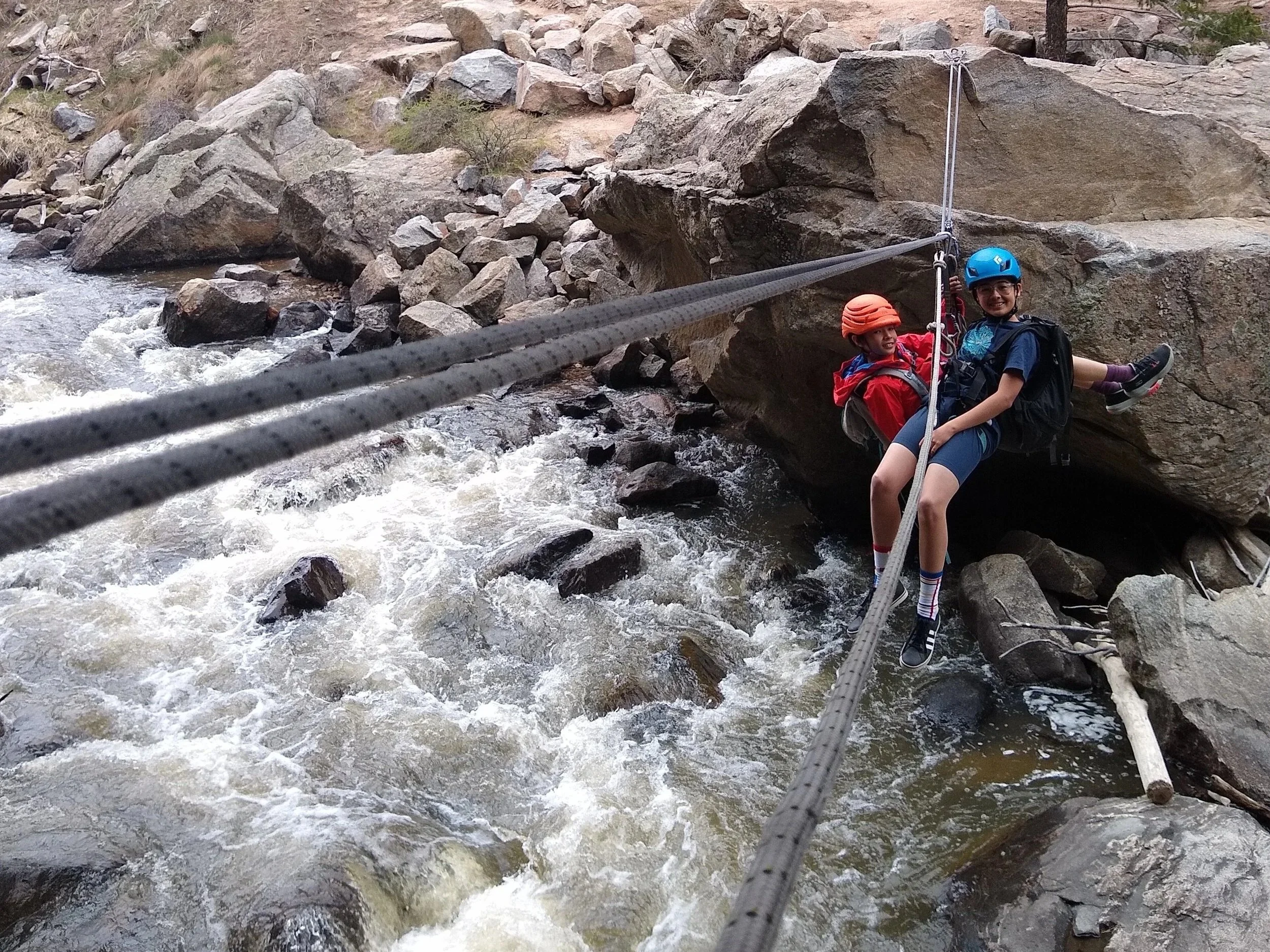
A simple illustration; actual lines and conditions vary.
Not sure which climbing day fits?
Tell us your experience, goals, preferred date, and group size. We’ll recommend the right format and choose the Boulder Canyon area around your group and the day’s conditions.
Quick answers
Boulder Canyon climbing FAQ
The exact route plan stays flexible. The day itself should feel simple.
Is Boulder Canyon good for first-time outdoor climbers?
Yes. A beginner cragging day uses carefully selected moderate routes, top ropes, and a pace built around learning. No previous outdoor climbing experience is required.
What is the difference between cragging and multipitch climbing?
Cragging means climbing several single-pitch routes and returning to the ground after each one. Multipitch climbing links several pitches into one longer route and usually has a smaller group size.
How many people can join?
Beginner and advanced cragging days are designed for one to six climbers. Multipitch options are generally limited to one or two climbers per guide.
When is Boulder Canyon climbing best?
Fall is the most consistently favorable season. Shaded crags work well in summer, while sunny walls can be excellent on mild winter days. The guide matches the crag to the season and forecast.