Your First Outdoor Climbing Day in Boulder: What to Expect
Your First Outdoor Climbing Day in Boulder: What to Expect
Your first day outside will feel slower and less obvious than the gym. You will climb fewer routes than you expect, learn more between attempts, and leave with a much clearer picture of how outdoor climbing works.
The hardest part of a first outdoor climbing day is often not the climbing. It is not knowing what the day will look like.
People wonder whether the approach will be difficult, whether they need technical knowledge, what happens if they get scared, and how they get back down.
The day itself is usually straightforward. You meet, walk to the wall, review the equipment, climb several routes on top rope, and talk through what you learned.
How to Get Started Outdoor Rock Climbing in BoulderNot Knowing What You Are Walking Into
The gym gives you a clear route, a flat floor and a finished anchor. Outside, the line is less obvious and the environment does not explain itself.
That uncertainty can make the day sound more technical or intimidating than it is. On a well-run beginner day, the systems are introduced before you use them, the routes are chosen for the group and no one expects you to arrive knowing how to build anchors or lead climb.
Most people need one day outside for the unfamiliar parts to become understandable.
The Shape of the Day
The exact schedule changes with the location, weather and group, but a typical three- to four-hour beginner session follows this rhythm.
Meet and walk to the wall
A beginner day may take place at Flagstaff Mountain, Boulder Canyon or another suitable local area. Approaches are often short, but the terrain can be uneven. Bring water, snacks, sunscreen, layers and sturdy shoes.
Fit gear and review the system
You put on a helmet and harness, review partner checks and learn how the top-rope system works. On a guided day, the technical setup is handled for you.
Climb, rest and try again
The first route is usually the biggest adjustment. Holds are not marked, footholds are subtle and the best line may not be obvious from the ground. You climb, rest, discuss what happened and apply it on the next attempt.
Learn from the pauses
Outdoor days include more time on the ground than gym sessions. That is where you learn rope management, communication, route-reading and how to make decisions around weather, fatigue and terrain.
Pack out and identify the next step
The group removes the system, checks the site and carries everything out. A useful first day ends with a clear idea of what to practice next—not with an attempt to learn every climbing discipline at once.
Gearing Up at the Wall
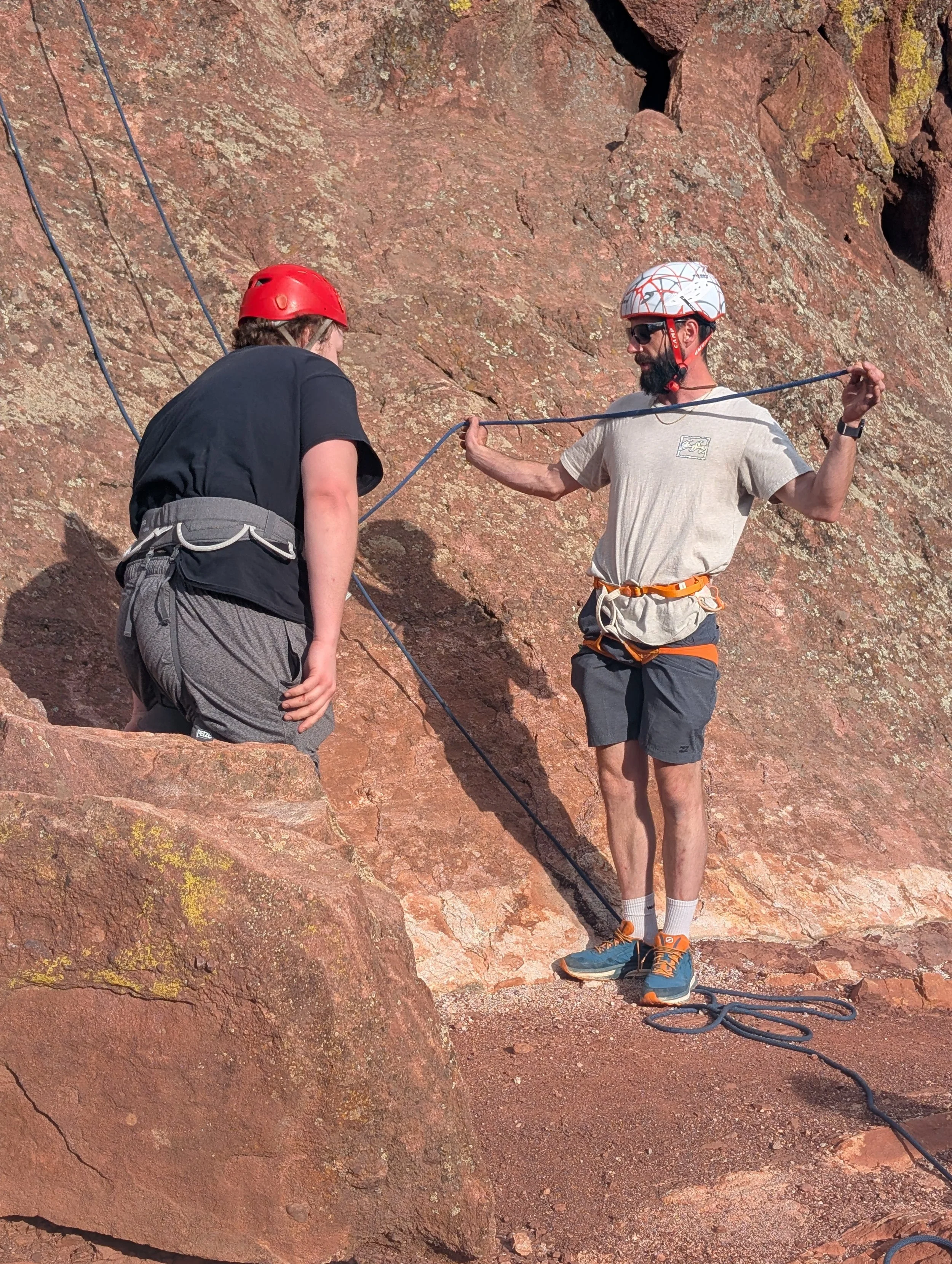
You do not need to arrive knowing the technical systems.
Most first days begin with top rope. The rope is already running through an anchor above the route, which allows you to climb without placing protection or clipping bolts.
You learn how the harness fits, how the rope connects to you, what the belayer is doing and which commands both partners use.
Technical equipment can be provided on a guided day. Bring clothing that allows movement, water, food, sun protection and layers for changing temperatures.
What Real Rock Feels Like
The first route often feels harder than its grade suggests. The rock has more texture, but the holds are less obvious. You must decide where the route goes rather than follow a set of colored grips.
Expect several routes or pitches, with rest and instruction between attempts. The total depends on the group, the length of the routes and how much time is spent learning systems. Four to eight pitches is a reasonable range for many first days.
You will not feel strong on every move. Outdoor climbing uses footwork, balance and grip in ways that may feel unfamiliar even to regular gym climbers.
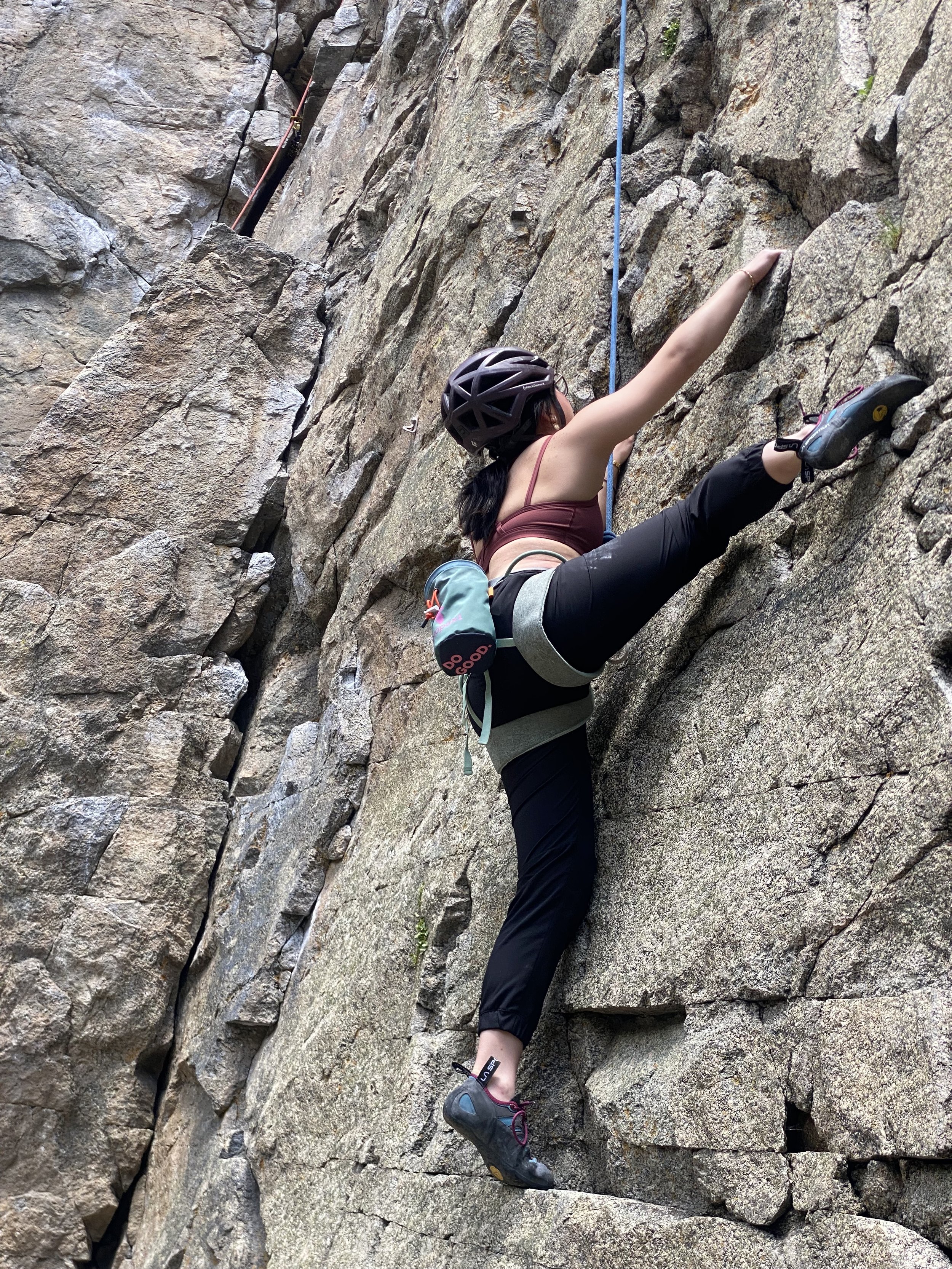
The route is not color-coded. Learning to notice usable features is part of the first day.
Lowering Is Simpler Than It Looks
On a top-rope system, the belayer controls your descent. You sit back into the harness, keep your feet against the wall and are lowered to the ground.
This is one of the parts beginners often worry about before the day. After the first route, it usually becomes routine.
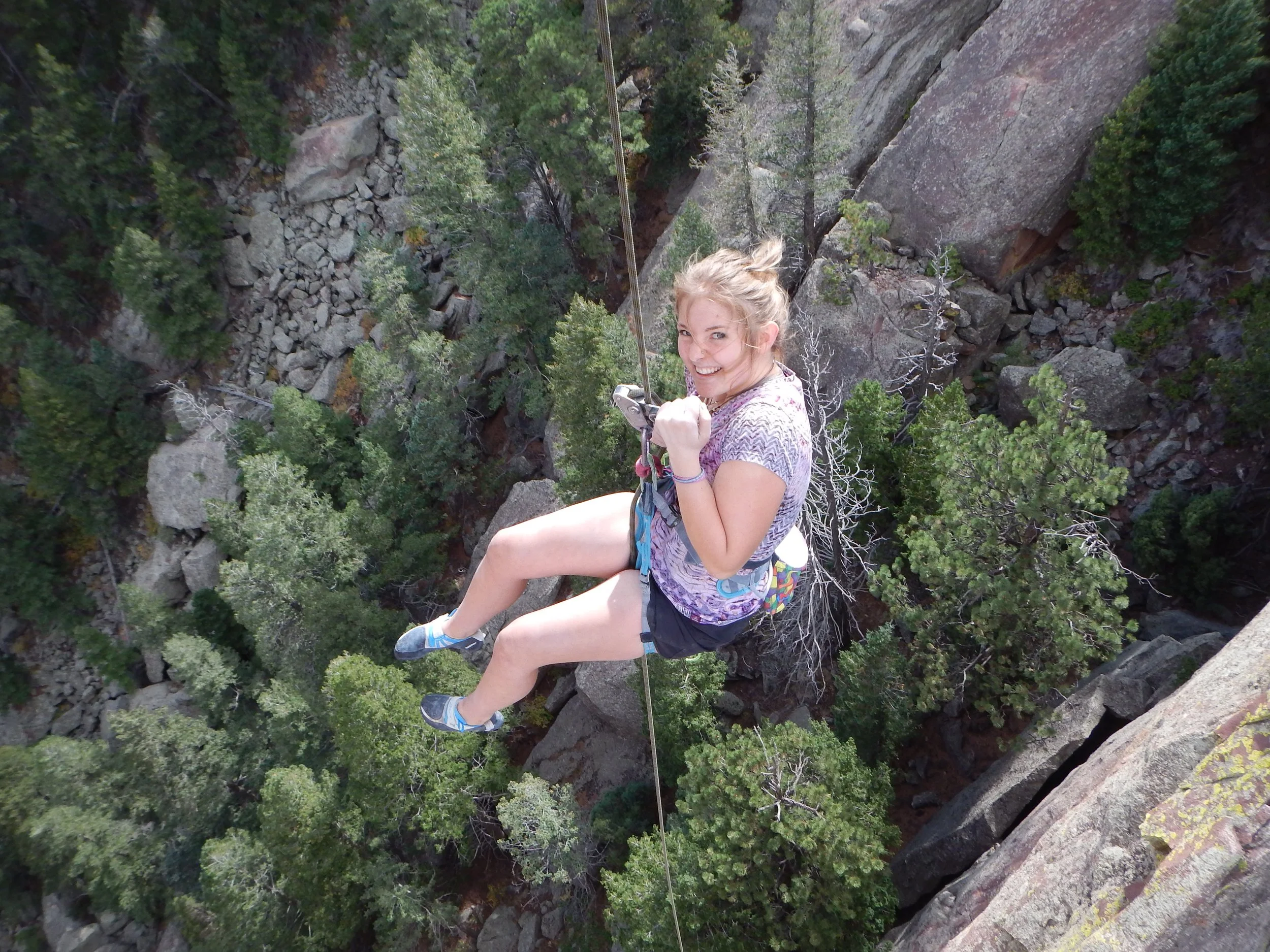
The rope holds your weight
You do not climb back down. Once the belayer has you, the system carries the load.
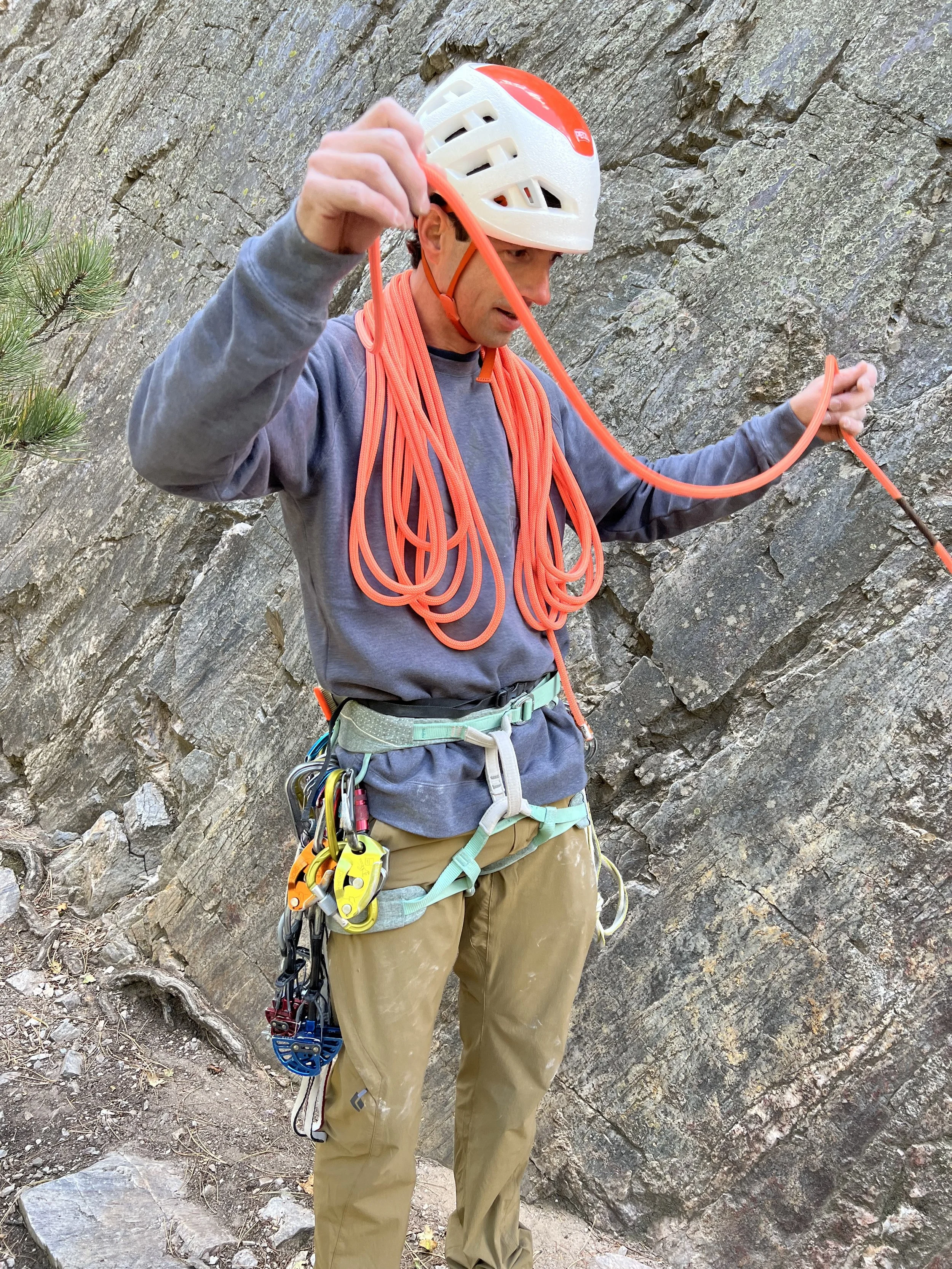
The system is managed deliberately
Checks, communication and controlled lowering matter more than speed.
How the Day Usually Feels at the End
Most people finish tired in ways they did not predict. Forearms and feet may feel worked, but the mental fatigue is often just as noticeable. You have spent several hours paying attention to movement, communication, terrain and unfamiliar systems.
The day is quieter than a gym session and less efficient if efficiency means completing the maximum number of routes. It is more useful in another sense: you leave understanding what outdoor climbing actually requires.
The gap between what you imagined and what the day actually involves is usually smaller than the fear suggested.
Why the First Day Goes Better With Experience
The logistics are not complicated, but someone needs to understand them. That includes choosing an appropriate wall, checking access and conditions, setting or inspecting the system, managing the rope and knowing when a route is suitable for the group.
An experienced partner can provide that foundation. A guide adds a structured progression and removes the need for your friend to teach while also managing the day.
The goal is not to make the experience dependent on a guide. It is to give you a correct first picture of the systems, movement and judgment that support independent climbing later.
Hiring a Rock Climbing Guide in BoulderFirst Outdoor Climbing Day FAQ
Do I need climbing experience before my first outdoor day?
No. A beginner session can start with no prior gym or outdoor experience. The route and instruction should match the group.
Do I need to buy climbing gear first?
No. Technical gear can be provided on a guided day. Bring water, food, layers, sun protection and sturdy footwear for the approach.
Will I have to lead climb?
No. Most first days use top rope, which allows you to focus on movement and communication without placing protection or clipping bolts.
What happens if I get scared halfway up?
You can pause, rest on the rope, continue or come down. A good first day does not depend on forcing a climber past a useful limit.
How many routes will I climb?
The number varies with route length, group size and pace. Many beginner days include roughly four to eight pitches or attempts.
Where do beginner climbing days happen near Boulder?
Flagstaff Mountain and Boulder Canyon are common options. The best location depends on weather, access, group goals and current conditions.
Start With One Good Day Outside
You do not need to arrive experienced or equipped. You need appropriate terrain, a clear system and enough time to understand what you are doing.